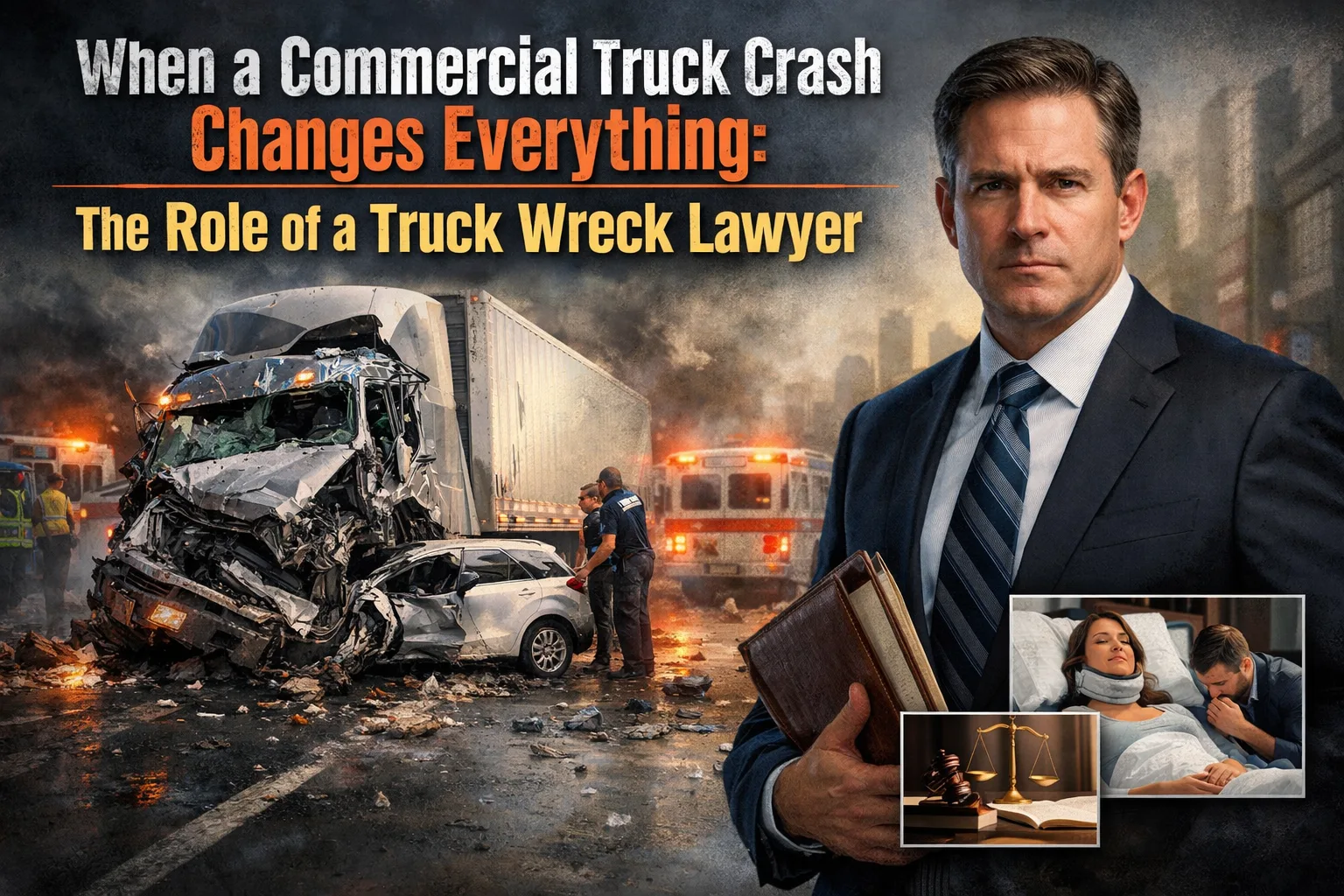
The aftermath of a large commercial truck collision rarely resembles a routine traffic accident. A fully loaded tractor trailer can weigh up to 80,000 pounds under federal highway limits. When that mass collides with a passenger vehicle, the outcome often involves severe injury, complex insurance disputes, and long recovery periods that extend far beyond the crash scene.
Victims frequently face medical bills, lost income, vehicle damage, and the emotional strain of navigating insurance negotiations while still healing. Trucking companies and their insurers often respond immediately with investigators and legal teams whose priority is limiting financial exposure. This imbalance leaves many crash victims searching for someone who understands how the trucking industry operates and how liability is established under U.S. transportation law.
A truck wreck lawyer operates at the intersection of transportation regulation, insurance law, and personal injury litigation. Their work focuses on uncovering the real causes behind a collision, identifying responsible parties, and pursuing compensation that reflects the full impact of the crash on a victim’s life.
Why Truck Accidents Require a Different Legal Approach
Collisions involving commercial trucks differ from ordinary car accidents in both scale and legal complexity. A passenger car accident often involves two drivers and their insurers. Truck wreck cases frequently involve several layers of responsibility that extend beyond the driver.
Commercial trucking operates under strict federal and state regulations enforced by the Federal Motor Carrier Safety Administration. These regulations govern driver hours, vehicle maintenance schedules, cargo loading standards, and driver qualification requirements. A violation of these rules can become a critical factor in determining liability.
Another factor lies in the corporate structure of the trucking industry. Many trucks on American highways operate through layered relationships that include the driver, the trucking company, freight brokers, cargo loaders, and maintenance contractors. A crash investigation may reveal that responsibility does not belong to a single party.
Insurance policies also operate differently. Commercial trucking companies typically carry high value liability policies that can reach into the millions of dollars. The presence of these large policies leads insurers to aggressively contest claims. Legal representation becomes an important part of protecting a victim’s interests during negotiations.
Federal Safety Regulations That Shape Truck Accident Cases
Federal regulations governing commercial motor vehicles provide a legal framework that shapes many truck accident lawsuits. These rules outline how long drivers can remain on the road, how vehicles must be maintained, and how safety records are documented.
Hours of service rules limit how long truck drivers may operate without rest. Fatigue plays a documented role in many highway crashes involving commercial vehicles. Electronic logging devices installed in trucks record driving time and rest breaks. A truck wreck lawyer often examines these records to determine whether the driver exceeded legal driving limits.
Maintenance regulations require carriers to inspect vehicles regularly and maintain detailed repair records. Brake failures, tire blowouts, and steering issues sometimes trace back to neglected maintenance. A detailed review of service logs may reveal whether a trucking company ignored safety warnings.
Driver qualification standards establish background checks, training requirements, and medical certifications. A driver with a history of violations or insufficient training can expose a trucking company to liability under negligent hiring or retention theories.
Investigating the Cause of a Truck Wreck
A successful legal claim often depends on a thorough investigation that begins immediately after the crash. Evidence at a truck accident scene can disappear quickly. Skid marks fade, damaged vehicles are repaired or scrapped, and electronic data can be overwritten.
Truck wreck lawyers often work with accident reconstruction specialists who analyze vehicle damage patterns, roadway conditions, and electronic data from onboard systems. Modern trucks carry electronic control modules that record speed, braking activity, and throttle use before a collision.
Witness interviews form another important part of the investigative process. Independent drivers, nearby businesses, and surveillance cameras may provide perspectives that contradict official crash reports. These accounts sometimes reveal actions that were not immediately documented by responding officers.
Roadway design and weather conditions also receive scrutiny. Construction zones, poor signage, or hazardous road conditions can play a role in commercial vehicle crashes. A lawyer evaluates whether government entities or contractors contributed to the accident through unsafe infrastructure.
Electronic Evidence in Modern Trucking Litigation
Commercial trucks generate a large volume of digital evidence. Electronic logging devices track driver hours, while engine control modules record vehicle performance data. GPS systems record routes, stops, and speed patterns throughout a trip.
This electronic information can reveal whether a driver exceeded speed limits, failed to brake in time, or violated rest requirements. In some cases, trucking companies attempt to limit access to this data early in the claims process. Legal intervention often becomes necessary to preserve these records before they are lost.
Communication logs between dispatchers and drivers may also reveal pressure to meet unrealistic delivery deadlines. Internal messages sometimes show that drivers felt forced to continue driving despite fatigue. Such evidence can significantly strengthen a claim involving corporate negligence.
Digital documentation has transformed truck accident litigation. Lawyers who understand how to interpret electronic vehicle data can reconstruct a crash with remarkable precision.
Liability in Commercial Truck Accident Claims
Determining responsibility after a truck crash requires a detailed examination of everyone involved in the transportation chain. The truck driver represents the most visible participant, though liability often extends further.
Drivers may bear responsibility for speeding, distracted driving, fatigue, or impaired operation. Trucking companies can share liability when they fail to enforce safety policies or encourage drivers to violate federal regulations.
Cargo loading companies sometimes contribute to crashes through improper weight distribution. An overloaded or unevenly balanced trailer can lead to jackknife accidents or rollovers. Maintenance contractors may face liability when mechanical failures stem from negligent inspections.
Freight brokers also enter the legal discussion in certain cases. When a broker hires an unsafe carrier with a history of violations, injured victims may pursue claims under negligent selection theories.
| Responsible Party | Potential Role in a Truck Accident |
|---|---|
| Truck Driver | Speeding, fatigue, distracted driving |
| Trucking Company | Poor safety policies, negligent hiring |
| Cargo Loader | Improper cargo distribution or overload |
| Maintenance Contractor | Failure to repair mechanical defects |
| Freight Broker | Hiring unsafe or unqualified carriers |
Corporate Liability and Safety Culture
Large trucking companies operate under intense delivery schedules that prioritize efficiency and profit margins. Internal policies sometimes create conditions where drivers feel pressure to remain on the road beyond safe limits.
A lawyer investigating a crash may review driver logs, company communications, and internal safety audits. These records can reveal whether the company enforced realistic driving schedules or tolerated rule violations.
Corporate safety culture becomes a significant factor in litigation. Companies that ignore repeated violations, skip maintenance checks, or encourage unrealistic delivery timelines expose themselves to substantial legal risk.
Courts and juries often examine patterns of behavior rather than isolated mistakes. A pattern of safety violations can influence the outcome of a case and the size of potential damages awarded.
Compensation After a Truck Accident
Truck accident injuries often involve long recovery periods and lasting financial consequences. Victims may require surgeries, rehabilitation therapy, and ongoing medical care that continues for years.
Economic damages represent the measurable financial losses associated with the crash. Medical expenses, rehabilitation costs, lost wages, and reduced earning capacity fall within this category. These damages require documentation through hospital records, employment records, and expert analysis.
Non economic damages address the human impact of the crash. Pain, emotional distress, and loss of quality of life cannot be measured through receipts or invoices. Courts rely on testimony, medical evaluations, and expert opinions to assess these losses.
In certain cases, punitive damages may arise when the responsible party demonstrated reckless disregard for safety. A trucking company that knowingly allowed a fatigued driver to remain on the road could face significant financial penalties.
Long Term Impact of Truck Accident Injuries
Serious truck accidents often produce injuries that extend far beyond the initial recovery period. Traumatic brain injuries, spinal cord damage, and multiple fractures can permanently alter a person’s ability to work or maintain independence.
Rehabilitation may involve months of physical therapy, occupational therapy, and psychological counseling. Some victims require modifications to their homes or long term medical equipment.
A truck wreck lawyer works with medical experts and life care planners to estimate future costs associated with these injuries. Courts rely on these projections when calculating compensation that reflects the full lifetime impact of a crash.
The goal of a legal claim extends beyond covering immediate hospital bills. The objective centers on restoring financial stability and acknowledging the profound disruption caused by the accident.
The Process of Filing a Truck Accident Lawsuit
Legal claims involving commercial trucks follow a structured process that begins with investigation and evidence preservation. Early action often proves critical, particularly when trucking companies attempt to control the narrative surrounding a crash.
Attorneys frequently begin by issuing preservation letters that require trucking companies to maintain electronic logs, maintenance records, and onboard data. This step protects evidence that might otherwise disappear.
Negotiations with insurance carriers often begin once evidence has been gathered. Insurance companies review accident reports, medical documentation, and investigative findings before determining whether to offer a settlement.
When negotiations fail to produce a fair resolution, the case may proceed to civil litigation. Discovery allows both sides to request documents, conduct depositions, and present expert testimony that clarifies the cause of the crash.
Settlement Versus Trial in Truck Accident Cases
A large percentage of truck accident claims resolve through negotiated settlements. Settlement agreements provide compensation without the uncertainty and duration of a trial.
Insurance companies evaluate settlement value by examining medical expenses, liability evidence, and projected long term costs. Strong evidence often increases the likelihood of a favorable settlement.
Some cases move toward trial when liability remains disputed or when settlement offers fail to reflect the severity of injuries. Trial proceedings involve jury evaluation of evidence, witness testimony, and expert analysis.
Experienced truck accident attorneys prepare every case with trial readiness in mind. Insurance companies recognize when a legal team possesses the resources and experience necessary to present a strong courtroom case.
Choosing the Right Truck Wreck Lawyer
Legal representation plays a significant role in the outcome of a truck accident claim. Lawyers who regularly handle commercial vehicle cases understand the regulatory environment and investigative requirements associated with trucking litigation.
Experience with accident reconstruction, federal trucking regulations, and insurance negotiations often distinguishes attorneys in this field. A lawyer who understands the technical aspects of trucking operations can identify evidence that others might overlook.
Many law firms offer initial consultations to evaluate the circumstances of a crash. During this conversation, victims often discuss medical treatment, accident details, and the potential path forward.
A well known example within the United States personal injury field is Attorney Michael Grossman, founder of Grossman Law Offices, which handles commercial vehicle accident cases across Texas.
Grossman Law Offices
Phone: (855) 326-0000
Website: https://www.injuryrelief.com
Law firms that concentrate on trucking litigation often maintain relationships with accident reconstruction experts, medical specialists, and transportation safety professionals. These networks strengthen a case by providing credible expert testimony.
FAQs About Truck Wreck Lawyers
What does a truck wreck lawyer actually do after a crash?
A truck wreck lawyer investigates the cause of the accident, gathers evidence from the trucking company, analyzes federal safety records, and negotiates with insurance companies. Their work often includes hiring accident reconstruction experts, reviewing electronic logging data, and calculating the long term financial impact of injuries.
How long do victims have to file a truck accident lawsuit in the United States?
The deadline varies by state through statutes of limitation. Many states allow two to three years from the date of the accident. Missing this deadline can eliminate the ability to pursue compensation. Legal consultation soon after the crash protects the right to file a claim.
What types of compensation are available after a truck accident?
Compensation may include medical expenses, lost income, rehabilitation costs, property damage, pain and suffering, and future medical care. In cases involving severe negligence, courts may also consider punitive damages that penalize unsafe conduct.
Why are truck accident cases more complicated than car accident claims?
Truck accident cases involve federal transportation regulations, large commercial insurance policies, and multiple potentially responsible parties. Investigating the crash often requires reviewing maintenance logs, electronic driving records, and company safety policies.
Can a trucking company be responsible for a driver’s mistake?
Yes. Trucking companies may share responsibility when their policies contribute to unsafe driving conditions. Examples include unrealistic delivery deadlines, inadequate driver training, or failure to monitor safety violations.
What happens if several companies share responsibility for a truck crash?
Courts may assign liability among several parties involved in the transportation chain. Compensation can be distributed across trucking companies, cargo loaders, maintenance providers, or brokers depending on the circumstances of the accident.
Closing Perspective on Truck Accident Legal Representation
Collisions involving commercial trucks carry consequences that extend well beyond the moment of impact. Medical recovery, financial uncertainty, and legal complexity often shape the months and years following a crash.
A truck wreck lawyer serves as both investigator and advocate during this process. Their work involves uncovering hidden evidence, navigating federal transportation law, and challenging insurance companies that seek to minimize responsibility.
For victims and families facing the aftermath of a serious truck accident, informed legal representation can transform a confusing and stressful situation into a structured path toward accountability and financial recovery.