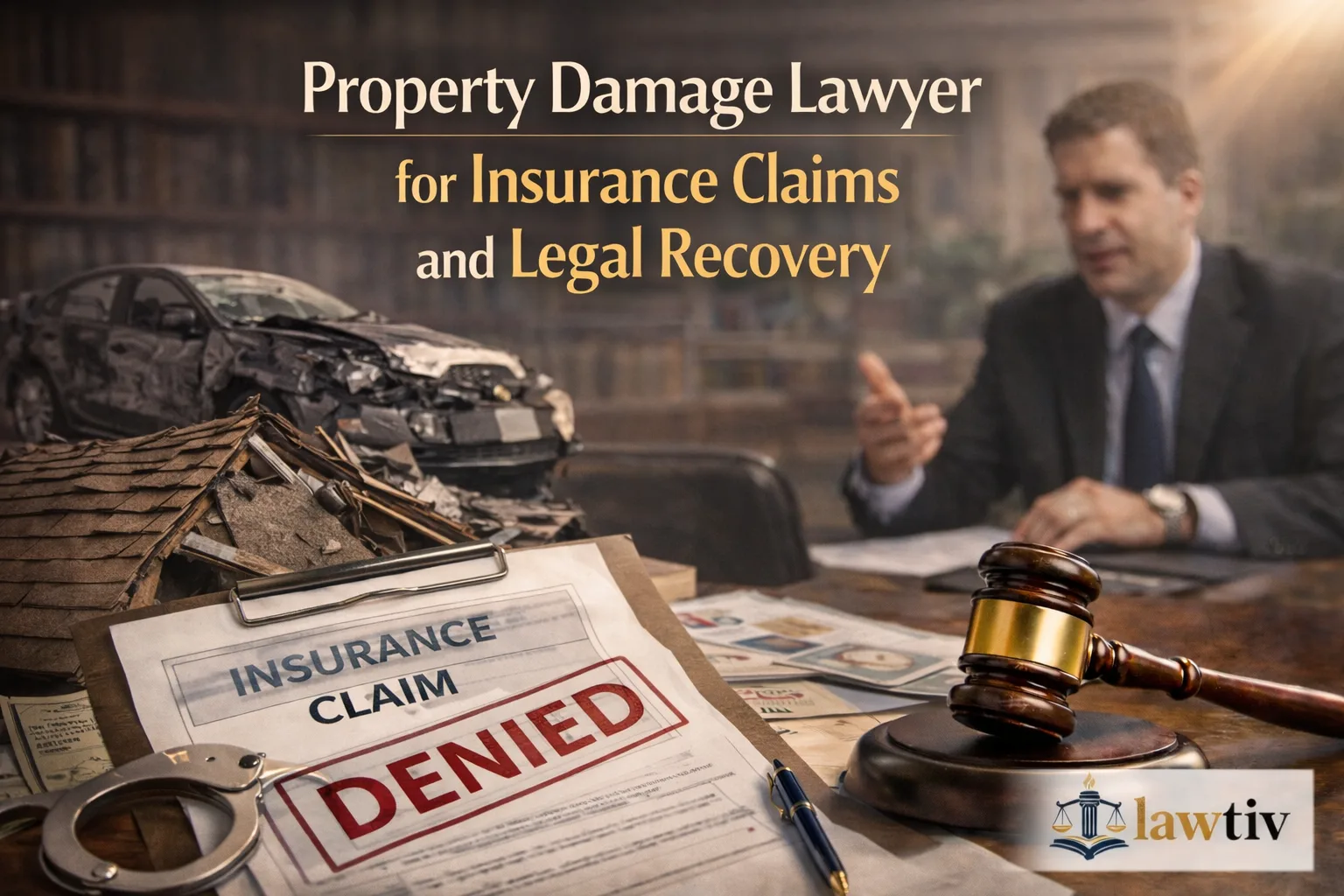
A shattered storefront after a reckless driver crashes into the building. A home reduced to charred framing after an electrical fire. A burst pipe flooding a commercial office overnight. Property damage disrupts lives and businesses in ways that extend far beyond repair costs. Financial strain, insurance disputes, and legal liability quickly follow.
Property owners across the United States face a difficult reality when insurers deny claims or responsible parties refuse to accept liability. Repair estimates climb while negotiations stall. Legal representation becomes critical when compensation delays threaten stability.
A property damage lawyer focuses on restoring financial balance after physical losses. Legal professionals in this field evaluate evidence, analyze liability, negotiate with insurance carriers, and pursue civil litigation when negotiations collapse. Their work often determines whether property owners recover full compensation or absorb devastating losses.
The Legal Role of a Property Damage Lawyer in Civil Claims
Property damage cases fall under civil law, where financial recovery rather than criminal punishment remains the objective. Lawyers practicing in this area represent individuals, landlords, business owners, and corporations seeking compensation for damaged or destroyed property.
The scope of these cases stretches across multiple circumstances. Vehicle collisions frequently damage homes, fences, or storefronts. Construction negligence can weaken foundations or cause flooding. Electrical faults may trigger fires that spread across neighboring structures.
A lawyer evaluates liability through documentation, expert analysis, and legal precedent. Photographs, repair estimates, structural engineering reports, and insurance policies become central evidence in these disputes.
Insurance companies hold enormous financial power and often employ teams of adjusters and legal advisors. A property damage lawyer balances this dynamic by representing the policyholder’s interests and pushing for fair settlement terms.
The legal process frequently involves negotiation first. When insurers dispute the claim or undervalue losses, litigation in state or federal court may follow.
Liability Principles That Govern Property Damage Cases
Property damage disputes often revolve around negligence. Liability arises when a person or organization fails to exercise reasonable care and that failure results in damage to someone else’s property.
An example may involve a construction contractor who leaves exposed wiring that sparks a fire. If investigators confirm improper installation, legal responsibility becomes clear.
Negligence can also involve vehicle accidents. When a driver loses control and strikes a building, the driver’s insurance carrier typically bears financial responsibility for the resulting damage.
In some situations liability becomes shared. A defective appliance may cause a fire, which places responsibility on the manufacturer. Insurance carriers and corporate defendants frequently dispute these allegations, which leads to complex litigation.
Insurance Companies and Claim Disputes
Insurance carriers investigate property damage claims aggressively because the financial stakes remain high. Adjusters inspect damage, request documentation, and sometimes challenge the cause of the incident.
Disputes often arise over valuation. A homeowner may receive a repair estimate of $80,000 from contractors, while an insurer offers half that amount. Differences like this lead many property owners to seek legal counsel.
Policy language also becomes a point of conflict. Insurance contracts contain exclusions, limitations, and technical definitions that shape coverage. Lawyers study these policies closely and challenge improper denials or delays.
Bad faith insurance practices sometimes enter the picture. When an insurer intentionally undervalues claims or refuses payment without justification, legal penalties may apply under state law.
Common Situations That Require a Property Damage Attorney
Physical property can be damaged in countless ways. Legal claims emerge when another party bears responsibility or when insurance carriers fail to honor policy terms.
Homeowners, landlords, and commercial property operators regularly encounter these scenarios across the United States. Legal representation helps clarify liability and ensures proper valuation of damages.
Vehicle Accidents Causing Structural Damage
Car crashes frequently extend beyond vehicle damage. Drivers sometimes lose control and strike homes, fences, garage structures, or storefronts.
Repairing structural damage to buildings can cost tens of thousands of dollars. When the at fault driver’s insurance carrier disputes coverage or liability, legal representation becomes essential.
Lawyers gather traffic reports, accident reconstruction analysis, and witness testimony to establish responsibility.
Fire and Electrical Damage Claims
Residential and commercial fires remain a major source of property damage litigation. Electrical faults, defective appliances, and negligent construction practices often cause these incidents.
Fires rarely damage only a single structure. Flames spread quickly in densely populated areas, affecting multiple properties and insurance policies.
Legal claims in these cases may involve manufacturers, contractors, landlords, or utility companies.
Storm Damage and Insurance Disputes
Severe weather across the United States leads to extensive property damage each year. Hurricanes along the Gulf Coast, tornadoes across the Midwest, and winter storms in northern states generate thousands of insurance claims.
Many disputes arise when insurers attribute damage to uncovered causes or depreciation rather than storm impact.
Lawyers often work with meteorologists, structural engineers, and public adjusters to support claims.
Commercial Property Loss and Business Disruption
Businesses face unique challenges when property damage interrupts operations. A restaurant kitchen fire or warehouse flood may halt revenue for weeks or months.
Legal claims in commercial property damage cases extend beyond repairs. Lost income, equipment replacement, and contract penalties may become part of the financial recovery.
Experienced lawyers evaluate both physical damage and economic consequences.
Legal Process for Filing a Property Damage Lawsuit in the United States
Property damage claims follow a structured legal path that varies slightly by state but generally follows similar stages across the country.
Legal professionals guide property owners through investigation, negotiation, and court proceedings when necessary.
The process often begins with a detailed investigation of the incident. Lawyers collect photographs, maintenance records, inspection reports, and witness statements to build a timeline.
Insurance claims frequently occur first. Policies typically require policyholders to notify insurers promptly after damage occurs.
If settlement discussions stall, attorneys file a civil lawsuit seeking financial compensation.
Investigation and Evidence Collection
Strong evidence forms the backbone of property damage litigation. Lawyers examine accident reports, engineering assessments, contractor repair estimates, and insurance policies.
Expert testimony often becomes critical in complex cases. Structural engineers analyze building damage, while fire investigators determine ignition sources.
Detailed documentation strengthens the claim during negotiations and trial.
Negotiation With Insurance Adjusters
Many property damage disputes resolve through negotiation rather than trial. Attorneys present evidence and demand fair settlement based on repair costs, depreciation calculations, and policy coverage.
Insurance carriers may respond with counteroffers or additional inspections. Skilled lawyers anticipate these tactics and push for proper valuation.
Negotiation remains an important phase because court proceedings can extend for months or years.
Civil Litigation and Court Proceedings
When negotiations collapse, attorneys pursue litigation. Lawsuits typically proceed through discovery, where both parties exchange evidence and conduct depositions.
Courts may order mediation or settlement conferences during the process.
If the dispute reaches trial, judges or juries determine liability and financial damages. Court rulings often involve significant compensation when evidence clearly supports the property owner’s claim.
Types of Property Damage Compensation Available
Financial recovery in property damage cases covers several categories of loss. Legal claims attempt to restore the property owner to the financial position they held before the incident occurred.
The specific damages awarded vary depending on the circumstances and applicable state law.
| Damage Category | Description | Example Scenario |
|---|---|---|
| Repair Costs | Expenses required to restore property to its original condition | Rebuilding a fire-damaged kitchen |
| Replacement Value | Cost of replacing destroyed structures or equipment | Replacing machinery in a factory |
| Loss of Use | Compensation for temporary inability to use property | Hotel stay while home repairs occur |
| Business Interruption | Lost income caused by property damage | Retail store closure after flooding |
| Additional Expenses | Secondary costs related to damage recovery | Temporary relocation costs |
Compensation calculations rely heavily on contractor estimates, appraisals, and financial records. Lawyers analyze these documents to present a credible valuation during negotiations or trial.
Selecting the Right Property Damage Lawyer
Choosing legal representation influences the outcome of property damage disputes. Attorneys practicing in this area combine knowledge of insurance law, civil litigation, and property valuation.
Experience with similar cases helps lawyers anticipate strategies used by insurance carriers and corporate defendants.
Reputation within the legal community also carries weight. Lawyers known for strong trial advocacy often secure favorable settlements because insurers recognize the risk of courtroom defeat.
Communication style matters as well. Property owners benefit from attorneys who explain legal options clearly and remain responsive during negotiations.
Experience With Insurance Litigation
Insurance disputes form the core of many property damage cases. Lawyers familiar with policy interpretation and bad faith law hold a significant advantage.
Insurance policies contain dense legal language that influences coverage limits, exclusions, and claim procedures. Skilled attorneys dissect these clauses and identify leverage points during negotiations.
Courtroom experience with insurance carriers also strengthens the attorney’s negotiating position.
Technical Knowledge of Property Valuation
Property damage claims often involve technical evidence. Structural engineers, fire investigators, and construction experts provide analysis that supports repair estimates and liability findings.
Lawyers comfortable working with technical experts build stronger cases.
Accurate valuation prevents insurers from undervaluing claims. Legal teams frequently review contractor bids, building codes, and replacement cost data during the process.
State Laws and Statutes of Limitations
Each state in the United States sets deadlines for filing property damage lawsuits. These deadlines, known as statutes of limitations, vary depending on the type of claim and jurisdiction.
Some states allow several years for property damage lawsuits, while others impose shorter filing windows.
Missing these deadlines can eliminate the right to pursue compensation entirely.
Lawyers track these timelines carefully and file claims before expiration.
Variations in Property Damage Laws Across States
Property law and insurance regulations differ widely between states. Coastal states often enforce strict building codes due to hurricane risks. Western states maintain regulations addressing wildfire damage.
Insurance rules also differ. Some states impose penalties on insurers that delay valid claims.
Attorneys practicing in specific jurisdictions remain familiar with these legal frameworks.
Importance of Timely Legal Action
Property damage cases rely heavily on evidence. Photographs fade in relevance as repairs occur. Witness memories weaken over time.
Prompt legal action preserves evidence and strengthens claims.
Lawyers frequently coordinate inspections and expert evaluations early in the process.
Economic Impact of Property Damage Litigation
Property damage litigation influences more than individual claimants. The broader legal and insurance landscape across the United States reflects the economic impact of these disputes.
Insurance companies adjust premiums based on risk exposure and claim payouts. Construction companies adopt stricter safety practices when liability claims increase.
Legal accountability encourages safer infrastructure and improved building standards.
Property damage lawyers play a role in this system by enforcing legal responsibility.
Court rulings also shape insurance industry behavior. Large verdicts in bad faith insurance cases often push insurers toward fairer claim handling procedures.
Frequently Asked Questions
What does a property damage lawyer do in an insurance dispute?
A property damage lawyer investigates the cause of property loss, evaluates insurance policy coverage, and negotiates with insurance carriers on behalf of the property owner. Legal representation becomes especially important when insurers deny claims, delay payments, or offer compensation far below repair estimates.
How much does a property damage lawyer cost in the United States?
Many property damage lawyers operate on contingency fees when litigation involves third party liability. Insurance claim disputes may involve hourly billing or hybrid fee arrangements depending on the complexity of the case and the expected financial recovery.
When should someone contact a property damage attorney?
Legal consultation becomes valuable when insurers deny claims, delay investigations, or offer settlements that fail to cover repair costs. Early involvement often prevents mistakes in documentation and claim procedures that insurers may later exploit.
Can a property damage lawyer handle business property claims?
Commercial property disputes represent a significant portion of property damage litigation. Attorneys handle claims involving office buildings, retail stores, warehouses, and industrial facilities where business interruption losses add complexity to the case.
What evidence strengthens a property damage lawsuit?
Photographs of the damage, contractor repair estimates, insurance policies, witness statements, and expert reports provide strong support for property damage claims. Detailed documentation helps lawyers demonstrate liability and accurate valuation.
How long does a property damage case take in court?
The timeline varies depending on state court procedures and the complexity of the case. Insurance settlement negotiations may resolve disputes within months, while contested lawsuits involving multiple parties can extend beyond a year.
Closing Perspective on Property Damage Legal Representation
Property damage can destabilize households and businesses in a matter of hours. Insurance disputes, liability arguments, and repair costs create financial pressure that few property owners expect to manage alone.
Legal representation restores balance in these situations. Property damage lawyers investigate incidents, challenge insurance decisions, and pursue financial recovery through negotiation or litigation.
Across the United States, these attorneys operate at the intersection of property law, insurance regulation, and civil litigation. Their work ensures that responsible parties meet their legal obligations and that property owners regain the financial footing needed to rebuild.