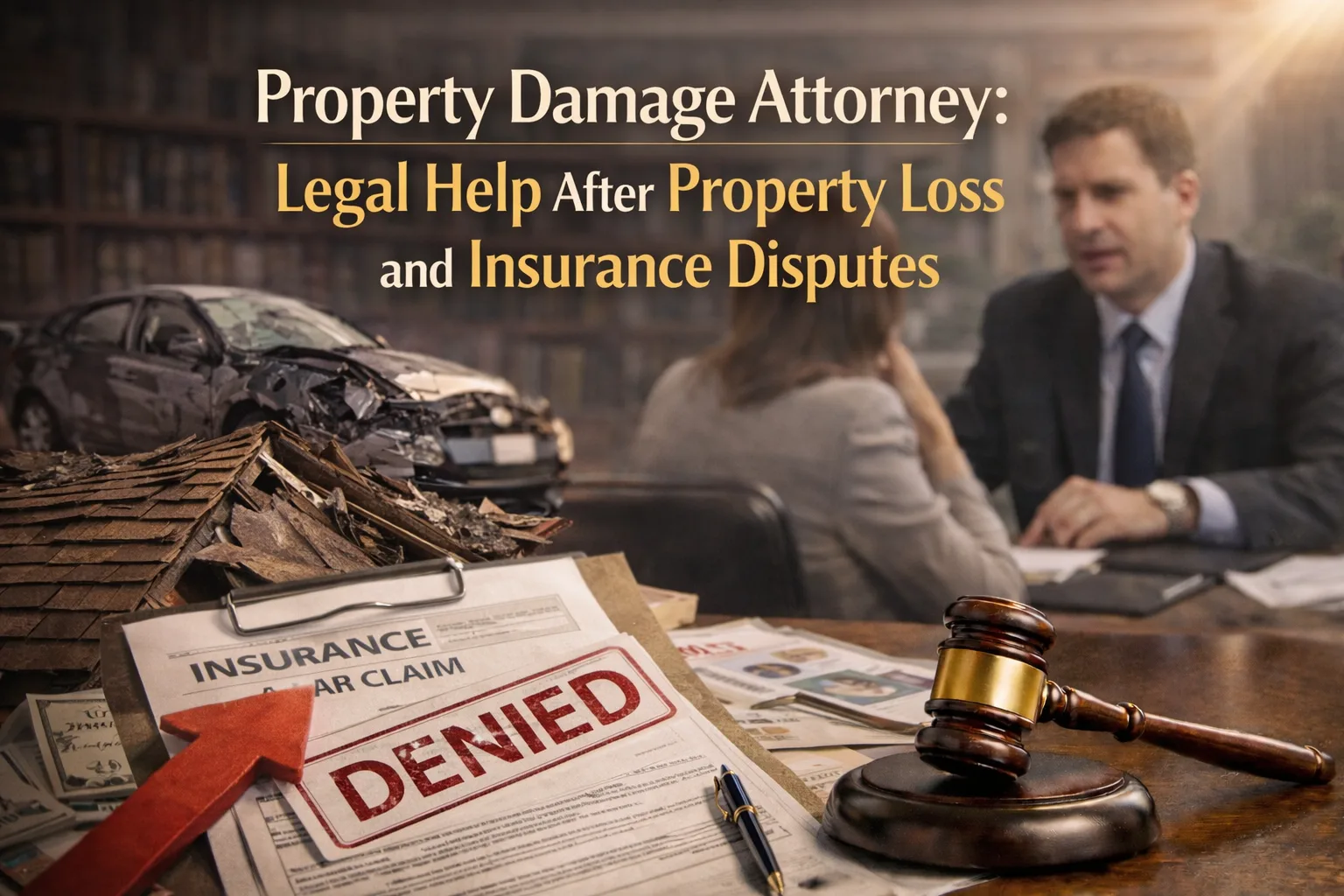
Property damage can change a person’s life in a single moment. A house fire, destructive storm, burst pipe, or vehicle crash can leave homeowners and business owners facing financial chaos. Buildings become unsafe, possessions disappear, and insurance companies often move slowly or deny legitimate claims.
Many Americans assume their insurance policy will restore everything after a disaster. Reality often looks different. Insurers investigate aggressively, dispute repair costs, or claim the damage falls outside policy coverage. Property owners suddenly find themselves negotiating with large insurance companies that employ experienced adjusters and legal teams.
A property damage attorney represents individuals and businesses when property losses turn into legal or financial disputes. These lawyers investigate the cause of damage, interpret insurance contracts, negotiate with insurers, and pursue compensation when settlements fall short. Their role often determines whether a property owner receives a fair recovery or absorbs thousands of dollars in losses.
What a Property Damage Attorney Does in Legal Claims
Property damage law focuses on recovering financial compensation for harm to homes, buildings, vehicles, land, or personal belongings. Claims may arise from accidents, negligence, natural disasters, defective construction, or insurance coverage disputes.
A property damage attorney evaluates how the damage occurred and identifies every party responsible. Insurance companies are often involved, though liability sometimes falls on contractors, manufacturers, utility companies, or other drivers.
Legal representation becomes valuable when disputes arise over liability or compensation. Attorneys analyze insurance policies, inspect evidence, work with construction experts, and negotiate settlements that reflect the real cost of repairs or replacement.
Many property owners underestimate the complexity of damage claims. Repair estimates, engineering reports, depreciation calculations, and policy exclusions often determine how much compensation is available. Skilled legal counsel interprets these technical details while protecting the financial interests of the property owner.
Insurance Claim Disputes and Delayed Payouts
Insurance disputes represent one of the most common reasons people contact a property damage attorney. Policyholders file claims expecting support during difficult situations. Instead, they may receive low settlement offers, delayed responses, or outright claim denials.
Insurers frequently argue that certain damages resulted from excluded causes such as wear and tear, improper maintenance, or flooding rather than covered events. Policy language can become highly technical, with clauses that determine whether damage qualifies for reimbursement.
Attorneys examine the policy wording and challenge unfair interpretations. Independent adjusters, engineers, and repair specialists may review the damage and provide reports that support the claim. Legal representation often shifts negotiations toward fairer settlements.
Liability Investigations After Property Damage
Many damage claims involve determining responsibility for the incident. Fires may originate from faulty wiring, defective appliances, or neighboring structures. Water damage can result from construction defects, plumbing failures, or municipal infrastructure issues.
A property damage attorney coordinates investigations that uncover the real cause of the loss. Evidence collection may include building inspections, witness interviews, engineering evaluations, and accident reconstruction.
When negligence contributed to the damage, legal claims may extend beyond insurance coverage. Contractors, landlords, manufacturers, or maintenance companies could become defendants in lawsuits seeking financial recovery.
Litigation and Court Representation
Some property damage disputes reach court when settlement negotiations collapse. Litigation allows a judge or jury to determine liability and compensation.
Attorneys prepare legal filings, present expert testimony, and challenge the arguments raised by insurers or opposing parties. Court proceedings examine repair costs, policy coverage, property valuation, and the circumstances that caused the damage.
Litigation requires careful preparation and a deep understanding of state property laws. Each state maintains unique statutes governing insurance disputes, negligence claims, and deadlines for filing lawsuits.
Types of Property Damage Cases Attorneys Handle
Property damage claims arise from many different situations. Residential homeowners, commercial property owners, renters, and vehicle owners all face potential losses when accidents or disasters strike.
Legal representation helps determine who bears responsibility for the damage and how compensation should be calculated.
Fire and Smoke Damage Claims
Residential fires represent one of the most devastating forms of property damage. Flames destroy structures, smoke contaminates interior surfaces, and water from firefighting efforts can create additional losses.
Insurance companies often dispute fire claims when the cause remains unclear. Investigations must determine whether electrical faults, appliance failures, negligence, or external factors caused the fire.
Property damage attorneys work with fire investigators who analyze burn patterns, electrical systems, and structural conditions. These experts provide critical evidence that supports insurance claims or liability lawsuits.
Smoke damage also creates complications. Walls, furniture, and ventilation systems absorb smoke particles that produce lasting contamination. Restoration costs frequently exceed initial estimates, making professional legal representation valuable during claim negotiations.
Storm, Hurricane, and Weather Damage
Severe weather causes billions of dollars in property losses across the United States each year. Hurricanes along the Atlantic and Gulf coasts, tornadoes in the Midwest, wildfires in western states, and winter storms in northern regions all produce large volumes of insurance claims.
Weather damage cases often involve disputes over the source of destruction. Wind damage may be covered under homeowners insurance, while flood damage often requires separate policies through federal flood insurance programs.
Property damage attorneys analyze weather reports, structural inspections, and policy language to determine coverage eligibility. Accurate documentation becomes essential when insurers attempt to attribute damage to uncovered causes.
Water Damage and Plumbing Failures
Water damage appears deceptively simple. In reality, insurance policies contain numerous clauses that limit coverage depending on the source of water intrusion.
Burst pipes, leaking roofs, appliance failures, and sewer backups create costly property losses. Some insurance policies exclude certain types of water damage unless additional coverage exists.
Attorneys review policy terms while consulting with plumbing specialists, engineers, and restoration experts. Their goal centers on proving that the damage resulted from a covered event rather than gradual deterioration.
Vehicle Property Damage Claims
Car accidents produce property damage claims involving vehicle repairs, structural damage to buildings, and destruction of personal belongings inside vehicles.
Insurance companies often dispute repair estimates or argue that vehicles qualify as total losses rather than repairable assets. Disagreements over depreciation values can significantly reduce compensation.
A property damage attorney negotiates with insurance companies and evaluates whether additional legal claims exist against negligent drivers or third parties responsible for the accident.
Insurance Companies and Property Damage Claims
Insurance companies play a central role in property damage recovery. Policies promise financial protection during disasters, yet claim disputes occur frequently.
Policyholders sometimes feel overwhelmed during negotiations with insurers. Adjusters investigate claims with the goal of minimizing company payouts, while policyholders seek full compensation for repairs and replacement costs.
Claim Denials and Policy Interpretation
Insurance contracts contain dense legal language that defines coverage limitations. Certain policies exclude flood damage, earth movement, mold contamination, or damage caused by poor maintenance.
Insurers may rely on these clauses to deny claims even when policyholders believe coverage should apply. Attorneys analyze policy wording and challenge denials that conflict with the contract terms.
Legal representation often reveals misinterpretations or overlooked policy provisions that support the claim.
Underpaid Insurance Settlements
Underpayment disputes arise when insurers approve a claim yet offer compensation far below the real repair cost. Adjusters may rely on internal repair estimates that underestimate materials, labor, or structural damage.
Contractors hired by homeowners frequently discover additional damage once repairs begin. Updated estimates can significantly increase the financial scope of the claim.
Property damage attorneys present independent repair evaluations that reflect actual reconstruction costs. Negotiations then focus on securing compensation aligned with professional repair assessments.
Bad Faith Insurance Practices
Bad faith insurance practices occur when insurers deliberately delay claims, ignore evidence, or refuse payment without valid justification.
United States law allows policyholders to pursue additional damages when insurance companies engage in bad faith conduct. Courts may award compensation that exceeds the original claim value when insurers violate their legal obligations.
Attorneys gather documentation showing communication delays, inadequate investigations, or unjustified claim denials. These cases require careful legal strategy and strong evidence.
Hiring a Property Damage Attorney in the United States
Property damage claims vary widely depending on state laws, insurance regulations, and the specific circumstances of the loss. Hiring the right legal representation can shape the outcome of a case.
Experienced attorneys bring knowledge of local courts, insurance regulations, and property valuation standards. Their guidance allows property owners to navigate complex legal processes with confidence.
Initial Case Evaluation and Evidence Review
The first stage of legal representation involves reviewing the details of the property damage incident. Attorneys examine photographs, repair estimates, insurance policies, and correspondence with insurers.
Site inspections may occur when structural damage remains visible. Engineers, contractors, and building inspectors contribute technical insights that clarify the extent of damage.
This evaluation determines whether the claim should proceed through negotiation, insurance appeals, or litigation.
Legal Fees and Contingency Arrangements
Many property damage attorneys work on contingency fee agreements. Clients pay legal fees only if compensation is recovered through settlement or court judgment.
Contingency arrangements allow property owners to pursue legal claims without large upfront expenses. The attorney receives a percentage of the recovered compensation after the case concludes.
Fee structures vary depending on the complexity of the case, state laws, and whether litigation becomes necessary.
Time Limits for Filing Property Damage Claims
Every state maintains legal deadlines known as statutes of limitations. These laws define the period during which property damage lawsuits must be filed.
Insurance policies also impose deadlines for reporting damage and submitting claims. Missing these deadlines may eliminate the possibility of recovering compensation.
Property owners benefit from consulting an attorney soon after damage occurs. Early legal guidance preserves evidence and protects legal rights.
Common Property Damage Scenarios in U.S. Civil Law
Property damage claims arise under several branches of civil law. Insurance disputes represent only one category of cases.
Negligence claims involve situations where another person or company caused damage through careless actions. Construction defect cases focus on faulty building practices that create structural failures or water intrusion.
Product liability claims arise when defective appliances or building materials cause fires, floods, or other destructive incidents. Utility companies sometimes face lawsuits after electrical failures or gas leaks damage property.
Each scenario requires legal analysis of liability, insurance coverage, and the cost of restoring the property.
Financial Impact of Property Damage
Property damage extends far beyond repair bills. Homeowners often face temporary housing costs, lost income, and the emotional stress of rebuilding their lives.
Businesses may experience extended closures when commercial property becomes unusable. Lost revenue, employee disruptions, and supply chain delays compound the financial consequences.
Attorneys evaluate these secondary losses when calculating compensation. Economic damages may include relocation expenses, lost rental income, and business interruption losses.
Insurance policies sometimes include business interruption coverage for commercial property owners. Attorneys ensure that these provisions are fully applied during claim negotiations.
Practical Case Timeline in Property Damage Claims
The timeline for property damage claims varies widely depending on the complexity of the case, insurance cooperation, and whether litigation becomes necessary.
| Stage | Typical Activity | Estimated Duration |
|---|---|---|
| Incident and damage discovery | Property owner reports damage and begins documentation | Immediate |
| Insurance claim filing | Claim submitted with photographs and repair estimates | Days to weeks |
| Investigation period | Adjusters and experts inspect the damage | Weeks |
| Negotiation phase | Settlement discussions between insurer and attorney | Several weeks or months |
| Litigation if necessary | Lawsuit filed and court proceedings begin | Months to over a year |
| Resolution | Settlement agreement or court judgment | Varies by case |
This timeline illustrates how professional legal guidance often becomes essential during complex disputes.
Evidence That Strengthens Property Damage Claims
Successful claims depend on strong evidence that clearly demonstrates the cause and extent of damage. Property owners benefit from documenting losses immediately after the incident.
Photographs, video recordings, repair estimates, and maintenance records all contribute valuable information. Insurance companies examine this evidence closely when evaluating claims.
Attorneys often expand evidence collection by consulting engineers, fire investigators, construction experts, and financial analysts. Expert testimony can significantly influence settlement negotiations or court verdicts.
Detailed documentation also prevents insurers from disputing the severity of the damage or suggesting that property owners contributed to the loss.
Economic and Legal Trends in Property Damage Litigation
Property damage litigation has evolved alongside environmental risks, climate events, and insurance industry practices.
Severe weather events have increased the number of claims filed in coastal and storm-prone regions. Hurricanes, wildfires, and floods produce massive insurance disputes that reach courts across the country.
Insurance companies have responded by tightening policy language and increasing claim investigations. This environment has increased demand for legal representation when property owners encounter claim denials or underpayments.
Courts continue to shape legal standards governing insurance conduct, contractor liability, and compensation calculations. Attorneys remain essential advocates when property owners seek fair financial recovery.
FAQs About Property Damage Attorney Services
What does a property damage attorney charge for legal representation?
Many property damage attorneys work on contingency agreements. Legal fees are collected as a percentage of the recovered compensation. Clients usually pay nothing upfront. Fee percentages vary depending on state regulations and case complexity. Some attorneys also offer hourly representation when litigation becomes highly technical or when clients prefer alternative billing arrangements.
When should someone contact a property damage attorney after an incident?
Early legal consultation helps protect evidence and ensures insurance deadlines are met. Attorneys often become involved when insurers deny claims, delay payment, or offer settlements far below repair costs. Property owners sometimes contact lawyers immediately after major disasters when the financial stakes are high.
Can a property damage attorney help with insurance claim denials?
Yes. Attorneys analyze insurance policies and the reasons provided for claim denial. If the denial conflicts with policy language or available evidence, legal action may challenge the insurer’s decision. Negotiations sometimes resolve the dispute, though lawsuits become necessary in certain cases.
Do property damage cases always go to court?
Most claims resolve through negotiation between attorneys and insurance companies. Litigation occurs when negotiations fail to produce fair compensation. Court proceedings involve presenting evidence, expert testimony, and legal arguments before a judge or jury.
What types of damages can be recovered in property damage cases?
Compensation typically includes repair costs, replacement of damaged property, and related financial losses. Certain cases involve additional damages such as business interruption losses, relocation expenses, or compensation related to bad faith insurance conduct.
How long do property damage lawsuits take in the United States?
Timelines vary based on the complexity of the case and the willingness of insurers to negotiate. Straightforward insurance disputes may resolve within several months. Litigation involving multiple parties or extensive investigations can extend beyond a year.
Wrap Up
Property damage cases involve far more than repairing broken structures. Insurance policies, liability disputes, and financial losses combine into complex legal challenges that require skilled representation.
A property damage attorney protects the rights of homeowners, business owners, and property investors who face unexpected destruction and insurance resistance. Their work bridges the gap between policy language, real repair costs, and legal accountability.
When property losses occur, legal advocacy ensures that recovery reflects the true value of what was damaged or destroyed. In the United States legal system, experienced counsel often determines whether property owners rebuild with adequate compensation or carry the financial burden alone.