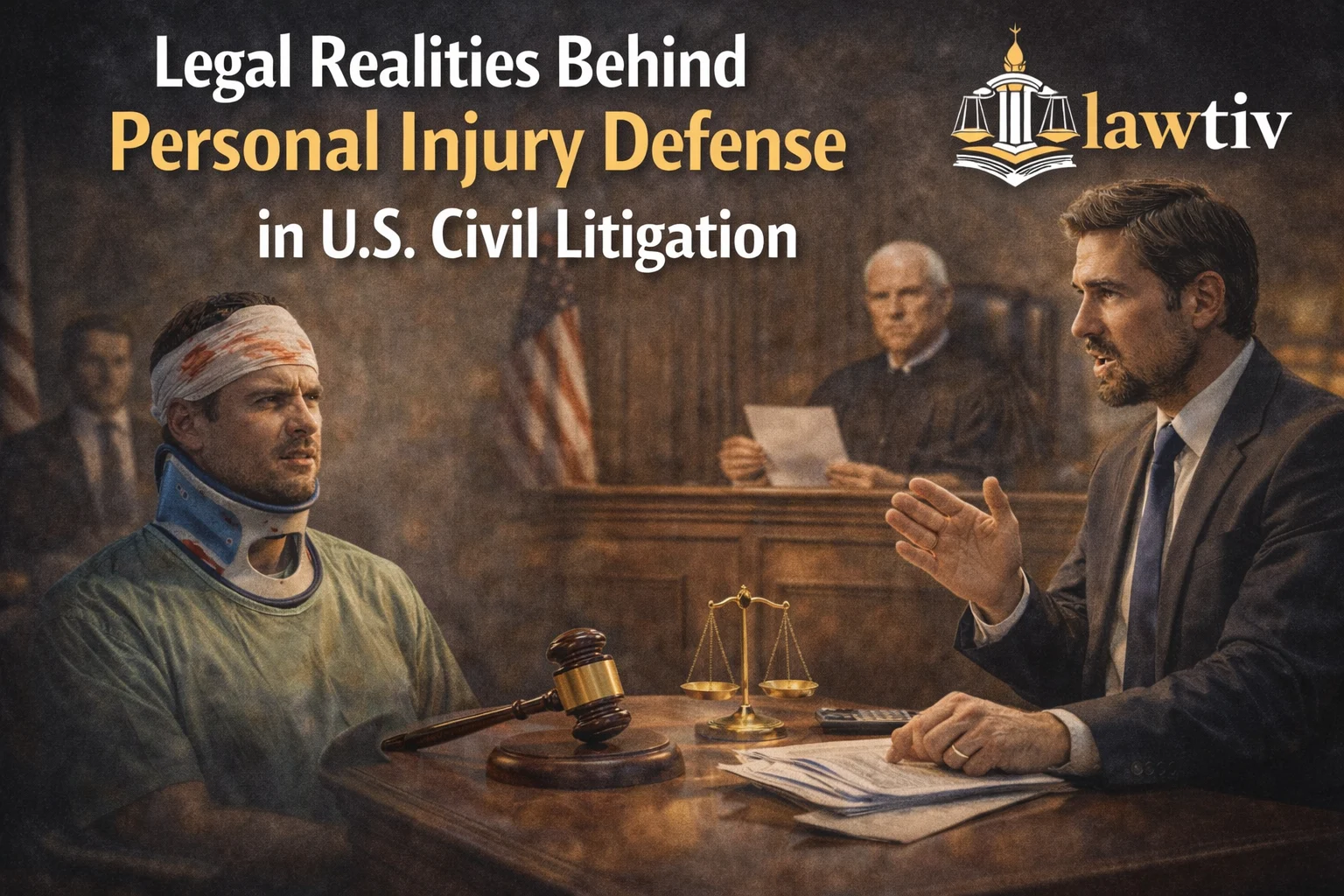
Civil lawsuits involving injury claims carry significant financial and reputational stakes for defendants across the United States. Businesses, drivers, property owners, medical professionals, and manufacturers frequently encounter allegations of negligence that can lead to costly litigation. Personal injury defense exists to challenge those allegations, protect legal rights, and ensure liability is assigned only when supported by evidence and law.
A defendant facing an injury claim immediately enters a structured legal process governed by state tort law, federal procedural rules when applicable, and complex insurance obligations. Defense attorneys evaluate every detail surrounding the alleged accident, from witness statements to medical documentation and liability standards defined by precedent. Their responsibility extends beyond courtroom argument. The process involves investigation, negotiation, and strategic litigation planning.
Personal injury defense reflects the balance between compensation for legitimate harm and protection against unsupported claims. Courts in the United States rely on adversarial presentation of facts, meaning both sides present competing narratives supported by legal reasoning. Defense counsel functions as the safeguard against speculative liability, inflated damages, or misinterpretation of events.
Economic consequences attached to injury lawsuits can reach extraordinary levels. Catastrophic injury claims often involve long term medical care projections, lost earnings calculations, and pain and suffering evaluations that push settlements into millions of dollars. Defense strategy must examine both factual liability and financial exposure with precision.
This area of law intersects with insurance coverage, risk management, accident reconstruction, and medical analysis. The modern defense attorney operates within a multidisciplinary environment where legal reasoning integrates with technical expertise. Success depends on methodical preparation, persuasive advocacy, and detailed knowledge of how courts evaluate negligence.
The Legal Foundation of Personal Injury Defense
Personal injury defense begins with the legal concept of negligence. A plaintiff must prove that a defendant owed a duty of care, breached that duty, and caused damages through the breach. Defense attorneys scrutinize each element because failure to prove even one requirement can defeat the claim.
Duty of care arises from relationships recognized by law. Drivers owe a duty to operate vehicles responsibly. Property owners must maintain reasonably safe premises. Medical professionals must meet established standards of care. Defense analysis focuses on whether such a duty existed under the specific circumstances presented in the case.
Breach of duty involves evaluating conduct against the standard expected of a reasonable person. Plaintiffs often claim that a defendant failed to exercise appropriate caution. Defense counsel challenges that assertion by presenting evidence showing reasonable conduct or unavoidable circumstances.
Causation forms the heart of many injury disputes. The plaintiff must demonstrate that the defendant’s conduct directly caused the alleged injury. Defense lawyers frequently challenge causation through expert testimony, medical record analysis, and examination of alternative explanations for the injury.
Damages represent the financial and personal harm claimed by the plaintiff. Defense attorneys analyze medical treatment records, wage documentation, and expert evaluations to determine whether claimed losses correspond to the incident described in the lawsuit.
Role of Defense Counsel in Civil Injury Litigation
Defense counsel performs a broad range of responsibilities once a claim is filed. Investigation typically begins immediately after the alleged incident, often coordinated with insurance carriers that provide liability coverage for the defendant.
Attorneys gather accident reports, surveillance footage, maintenance records, employment policies, and witness statements. This early evidence collection phase can shape the entire trajectory of the case. Missing documentation may weaken the defense position later during litigation.
Insurance companies play a central role in many personal injury defense cases across the United States. Auto insurance, premises liability policies, professional liability coverage, and product liability insurance frequently fund both legal representation and potential settlements. Defense attorneys work closely with insurance adjusters to assess claim value and litigation strategy.
Defense counsel also protects the procedural rights of defendants throughout the lawsuit. Filing responsive pleadings, raising affirmative defenses, and challenging jurisdictional issues all fall within this responsibility. Procedural errors can significantly impact the outcome of a case.
Types of Cases That Require Personal Injury Defense
The scope of personal injury defense extends across multiple sectors of American civil litigation. Automobile collisions represent one of the most common categories. Defendants in these cases may include drivers, vehicle manufacturers, or commercial transportation companies.
Premises liability lawsuits arise when individuals claim injury due to unsafe conditions on private or commercial property. Slip and fall incidents, inadequate security allegations, and structural hazards frequently form the basis of such claims. Defense strategy often examines maintenance records and property inspection practices.
Medical malpractice defense occupies a specialized area of injury litigation. Physicians, hospitals, and healthcare providers face allegations that treatment deviated from accepted medical standards. Expert testimony from medical professionals becomes critical during these proceedings.
Product liability defense emerges when a plaintiff alleges injury caused by defective goods. Manufacturers, distributors, and retailers may become defendants in these cases. Defense teams often involve engineers, safety specialists, and regulatory experts to analyze the alleged defect.
Investigation and Evidence Analysis in Injury Defense
A strong defense rarely begins in the courtroom. Evidence gathered early after an incident often determines whether liability can be challenged effectively. Investigators and attorneys work together to reconstruct events surrounding the alleged injury.
Accident reconstruction experts frequently assist in cases involving vehicle collisions, workplace incidents, or structural failures. Their analysis combines physics, engineering principles, and scene measurements to evaluate how an event likely occurred.
Medical documentation plays an equally important role. Defense attorneys analyze treatment timelines, diagnostic results, and physician notes to determine whether injuries correspond with the alleged accident. Pre existing medical conditions may complicate claims involving chronic pain or degenerative conditions.
Witness credibility can shape the outcome of litigation. Statements from individuals present during the incident may reveal inconsistencies in the plaintiff’s narrative. Defense counsel carefully evaluates witness reliability and possible bias.
Digital evidence increasingly influences personal injury defense. Security cameras, vehicle telematics, smartphone data, and social media posts can reveal activities inconsistent with claimed injuries or timelines described in testimony.
Medical Evidence and Injury Evaluation
Medical evidence carries extraordinary weight in personal injury litigation. Plaintiffs often present detailed reports from treating physicians outlining the nature and severity of injuries. Defense attorneys respond by examining whether those findings directly relate to the alleged incident.
Independent medical examinations frequently occur when the defense challenges the extent of claimed injuries. These evaluations involve physicians selected by the defense who review medical history, perform physical assessments, and provide opinions regarding injury causation and severity.
Defense strategy may also involve analysis of treatment patterns. Excessive therapy sessions, unusually rapid referrals to specialists, or inconsistent diagnostic results sometimes raise questions about the legitimacy of certain claims.
Long term disability projections represent another focal point. Plaintiffs occasionally present economic experts who estimate lifetime medical costs and lost earnings. Defense teams often retain their own economists to challenge these projections.
Evaluating Liability Through Accident Reconstruction
Accident reconstruction plays a significant role in determining how events unfolded. Engineers and safety experts review photographs, skid marks, vehicle damage, and roadway conditions to form scientific opinions regarding impact dynamics.
In automobile cases, reconstruction specialists analyze speed estimates, braking distances, and driver reaction times. Their testimony may demonstrate that a defendant acted reasonably under the circumstances or that another party contributed to the collision.
Premises liability reconstruction may involve evaluating lighting conditions, building code compliance, and hazard visibility. Defense counsel uses these analyses to argue that property conditions met reasonable safety expectations.
Scientific reconstruction often strengthens defense arguments by shifting the focus from speculation toward measurable facts. Jurors frequently respond strongly to evidence grounded in physical data and expert explanation.
Litigation Strategies Used in Personal Injury Defense
Defense attorneys approach each injury lawsuit with a structured litigation strategy. Early case evaluation determines whether settlement negotiations or aggressive courtroom defense offers the strongest outcome for the client.
Pleading stage tactics involve raising affirmative defenses recognized under state law. Comparative negligence remains one of the most common defenses. This argument asserts that the plaintiff contributed to the incident through their own actions.
Discovery phase strategy centers on gathering information from the opposing party. Depositions allow attorneys to question plaintiffs under oath regarding their account of the accident, medical history, and daily activities after the injury.
Motions filed before trial can significantly shape the legal landscape of the case. Defense attorneys often seek dismissal of claims lacking sufficient evidence or challenge expert testimony that fails to meet evidentiary standards.
Settlement negotiations occur throughout litigation. Many injury cases resolve through negotiated agreements rather than jury verdicts. Defense counsel evaluates settlement proposals based on liability risk, potential jury reaction, and projected litigation costs.
Comparative Negligence in U.S. Injury Law
Comparative negligence doctrine plays a central role in American injury litigation. Many states follow systems that allocate fault between parties involved in an accident. If a plaintiff bears partial responsibility for the incident, their financial recovery may be reduced accordingly.
Defense attorneys carefully analyze the plaintiff’s behavior leading up to the injury. Distracted driving, ignoring warning signs, or failing to follow safety instructions may all contribute to an accident scenario.
Evidence demonstrating shared fault often reduces the financial exposure of the defendant. Even a modest percentage of comparative fault assigned to the plaintiff can substantially lower damage awards.
Jurors must evaluate evidence presented by both sides when determining fault allocation. Defense attorneys frequently emphasize common sense safety expectations during trial arguments to illustrate how the plaintiff may have contributed to the incident.
Challenging Damages and Injury Claims
Financial damages claimed in injury lawsuits often represent the largest area of dispute. Plaintiffs may seek compensation for medical expenses, lost wages, diminished earning capacity, and emotional suffering.
Defense attorneys analyze these claims with careful scrutiny. Medical billing records may contain charges unrelated to the incident. Employment records might reveal inconsistent income history that affects wage loss calculations.
Pain and suffering damages present another complex challenge. These non economic damages rely heavily on subjective interpretation. Defense counsel frequently highlights evidence suggesting that daily activities remain largely unchanged despite alleged injuries.
Expert testimony from economists and vocational specialists may help the defense challenge large damage estimates. Their analysis examines employment prospects, labor market conditions, and medical limitations in a structured economic framework.
The Role of Insurance Companies in Personal Injury Defense
Insurance carriers provide legal defense in a large portion of injury lawsuits across the United States. Liability policies typically require insurers to appoint attorneys who represent the insured defendant throughout the litigation process.
Insurance adjusters conduct their own claim investigations early in the process. They evaluate accident reports, medical records, and potential exposure before determining whether settlement negotiations should begin.
Defense attorneys retained by insurers still maintain professional obligations to the defendant client. Ethical rules require that legal representation prioritize the interests of the insured party even when insurance companies fund the defense.
Policy limits often influence litigation strategy. If a claim exceeds the coverage available under an insurance policy, defendants may face personal financial exposure. Defense counsel works closely with insurers to evaluate settlement options that protect all parties involved.
Insurance defense practice has developed into a specialized legal field with its own procedural dynamics and negotiation frameworks. Attorneys working in this area regularly handle high volumes of claims while maintaining careful attention to legal strategy.
Courtroom Advocacy and Trial Dynamics
When settlement negotiations fail, personal injury defense moves into the trial phase. Courtroom advocacy becomes the focal point of the case. Attorneys present evidence, question witnesses, and deliver arguments aimed at persuading jurors.
Opening statements outline the defense narrative. Attorneys explain how the evidence will demonstrate that liability has been exaggerated or misinterpreted. Establishing credibility early with jurors can shape the perception of later testimony.
Cross examination represents one of the most critical tools available to defense counsel. Attorneys challenge inconsistencies in the plaintiff’s testimony, question expert opinions, and highlight gaps in evidence supporting the claim.
Closing arguments synthesize the entire case for the jury. Defense lawyers emphasize legal standards of negligence and encourage jurors to apply careful reasoning before assigning liability.
Verdicts depend on how jurors interpret evidence presented by both sides. Successful defense strategies often combine factual clarity with persuasive storytelling grounded in common sense reasoning.
Practical Comparison of Plaintiff and Defense Perspectives in Injury Cases
| Legal Element | Plaintiff Perspective | Defense Perspective |
|---|---|---|
| Duty of Care | Defendant owed legal responsibility to prevent harm | Duty may not exist under specific circumstances |
| Breach | Defendant acted carelessly or negligently | Conduct met reasonable safety standards |
| Causation | Defendant’s action directly caused injury | Injury may stem from unrelated factors |
| Damages | Medical costs and suffering linked to incident | Claimed damages may be exaggerated or unrelated |
Economic Impact of Personal Injury Litigation in the United States
Personal injury lawsuits form a substantial segment of civil litigation across American courts. Insurance industry data indicates billions of dollars paid annually in settlements and verdicts related to accident claims.
Businesses face particular exposure due to premises liability risks, workplace incidents, and product related injuries. Many companies invest heavily in risk management programs designed to prevent incidents that could lead to litigation.
Medical malpractice claims represent another financially significant category. Defense costs for healthcare providers can reach substantial levels due to expert testimony requirements and complex medical analysis.
Economic implications extend beyond defendants and plaintiffs. Insurance premiums, consumer product pricing, and healthcare costs often reflect the financial realities of liability exposure within the legal system.
Personal injury defense therefore operates not only as a legal function but also as a broader economic safeguard that influences industries across the country.
Frequently Asked Questions About Personal Injury Defense
What does a personal injury defense attorney do in a civil lawsuit?
A personal injury defense attorney represents individuals or organizations accused of causing injury through negligence. Their work includes investigating the incident, challenging liability claims, reviewing medical evidence, negotiating settlements, and presenting arguments in court if the case proceeds to trial.
Who pays for the defense in most personal injury cases?
Insurance companies typically provide legal defense when the defendant holds liability coverage. Auto insurance, homeowners policies, business liability insurance, and professional malpractice coverage often include a contractual obligation for the insurer to hire and fund defense attorneys.
Can a defendant avoid paying damages in an injury lawsuit?
A defendant may avoid liability if the plaintiff fails to prove negligence or causation. Courts require clear evidence connecting the defendant’s conduct to the alleged injury. If that link remains unproven, the claim may be dismissed or decided in favor of the defense.
How long do personal injury defense cases last in U.S. courts?
Duration varies widely depending on the complexity of the case and the jurisdiction involved. Some claims resolve within several months through settlement negotiations. Cases involving extensive discovery or expert testimony may continue for several years before reaching trial.
What happens if multiple parties share responsibility for an accident?
Many states apply comparative negligence rules that allocate fault among the parties involved. Each party may be responsible for a percentage of damages based on their level of contribution to the incident.
Why do many personal injury cases settle before trial?
Litigation carries financial risk and uncertainty for both plaintiffs and defendants. Settlement agreements allow parties to control outcomes and avoid the unpredictability of jury decisions. Defense attorneys often evaluate settlement options carefully while preparing for trial simultaneously.
Closing Perspective on Personal Injury Defense in the United States
Personal injury defense represents a sophisticated branch of civil litigation shaped by legal doctrine, insurance frameworks, and courtroom advocacy. Defense attorneys operate at the intersection of law, medicine, engineering, and economics while protecting defendants from unsupported liability claims.
Successful defense strategies rely on disciplined investigation, detailed evidence analysis, and persuasive legal reasoning presented before judges and juries. Each case requires careful examination of facts, applicable law, and financial implications.
The American civil justice system depends on the balance created by strong representation on both sides of a dispute. Personal injury defense preserves that balance by ensuring that allegations of negligence face rigorous legal scrutiny before financial responsibility is assigned.