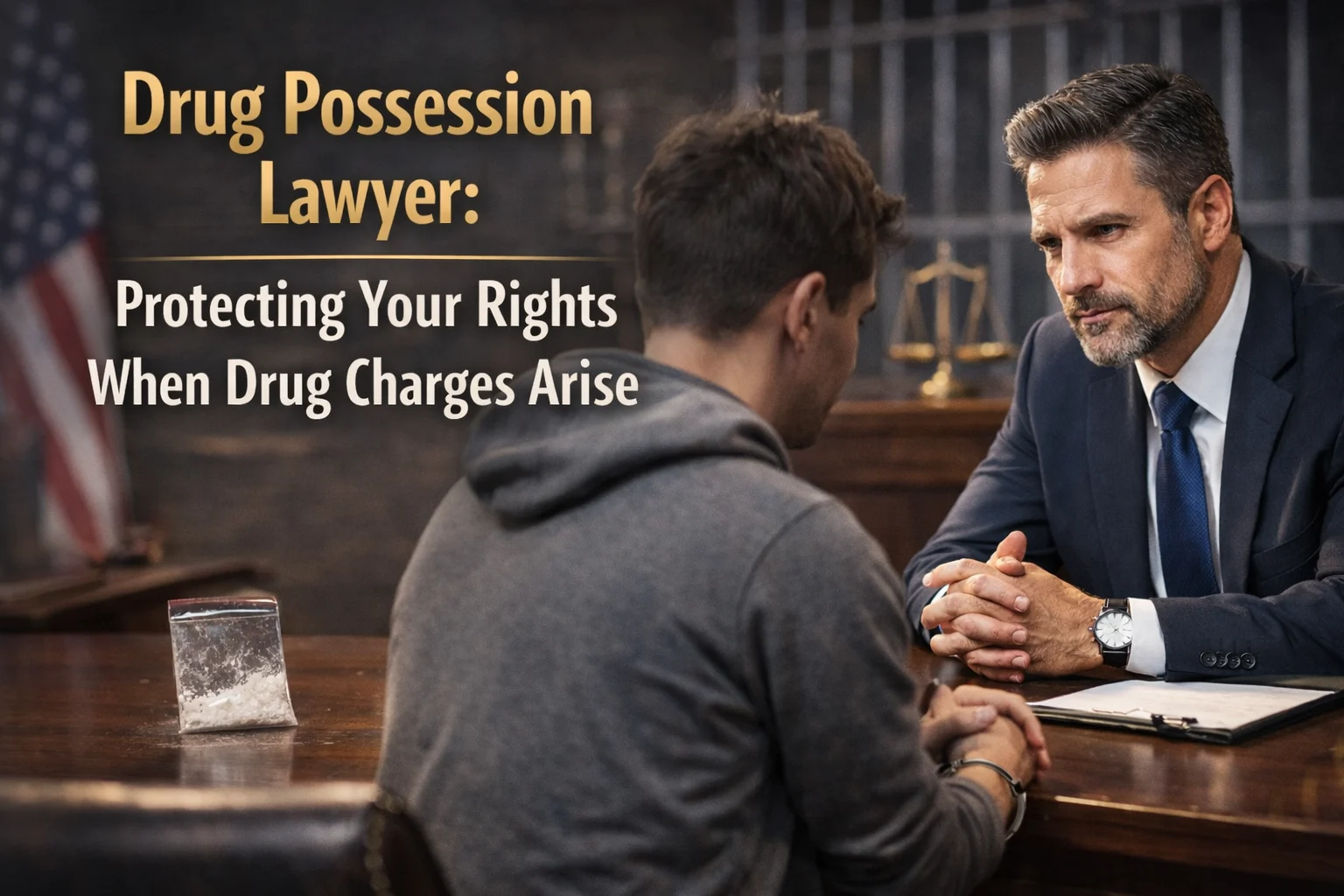
A sudden arrest for drug possession can flip a person’s life upside down within minutes. Police lights, questioning, and the realization that criminal charges are now attached to your name create a level of stress few people anticipate. A single possession charge can influence employment, housing opportunities, professional licensing, and immigration status in the United States.
The criminal justice system moves quickly after an arrest. Prosecutors gather evidence, courts schedule hearings, and law enforcement prepares documentation. Many defendants do not fully grasp the legal consequences of possession charges until they face arraignment. At that stage, the role of a drug possession lawyer becomes critical.
Legal defense in drug possession cases is rarely straightforward. Police procedure, search legality, laboratory testing, and prosecutorial strategy all influence the direction of a case. Skilled defense attorneys examine each detail with precision, searching for procedural errors, constitutional violations, and evidentiary weaknesses that may reshape the outcome.
Drug Possession Charges in the United States Legal System
Drug possession laws in the United States stem from both federal statutes and state criminal codes. While federal law establishes nationwide drug classifications, individual states control how possession offenses are prosecuted. That distinction creates significant variation in penalties and enforcement.
Controlled substances fall into schedules under the federal Controlled Substances Act. Schedule I substances such as heroin or LSD carry the highest restrictions due to their perceived abuse potential. Schedule II drugs include substances like cocaine and certain prescription opioids. Lower schedules include medications that still carry regulatory oversight.
State prosecutors rely on these classifications when determining criminal charges. Possession of a small amount of marijuana in one state may result in a civil citation, while possession of the same substance in another state may trigger criminal prosecution. Defense attorneys must evaluate local statutes alongside federal regulations to determine possible defenses.
Federal vs State Drug Possession Laws
Federal drug possession cases typically involve larger investigations, interstate trafficking allegations, or crimes occurring on federal property. Federal prosecutors often pursue cases involving significant drug quantities or organized distribution networks.
State courts handle the majority of possession cases. Local prosecutors focus on street level arrests, traffic stops, and individual possession allegations. A drug possession lawyer operating in state courts studies the nuances of local criminal statutes and sentencing guidelines.
State law also influences diversion programs and rehabilitation alternatives. Certain jurisdictions emphasize treatment and supervision rather than incarceration for low level possession offenses.
Types of Possession Charges Prosecuted
Possession charges often fall into three primary categories. Actual possession refers to drugs discovered directly on a person’s body or clothing. Constructive possession involves substances found in areas a person controls, such as a vehicle or apartment.
Joint possession arises when multiple individuals share access to a location where drugs are discovered. Prosecutors sometimes attempt to charge every person present, even if evidence connecting a specific individual remains weak.
The legal classification of the charge influences potential penalties. Misdemeanor possession cases often involve smaller drug quantities, while felony possession may arise when larger quantities appear or prior convictions exist.
Why Hiring a Drug Possession Lawyer Matters
A criminal accusation alone can alter the course of a person’s future. Employers frequently conduct background checks, professional licensing boards review criminal histories, and housing providers evaluate legal records. Defense attorneys work to limit the long term impact of criminal allegations.
Drug possession lawyers analyze cases from the moment charges appear. They review police reports, examine search warrants, interview witnesses, and scrutinize laboratory testing procedures. This level of examination can uncover procedural issues that weaken the prosecution’s case.
Experienced attorneys also understand how prosecutors build drug cases. That familiarity allows them to anticipate arguments and construct legal strategies before court proceedings intensify.
Early Legal Intervention in Criminal Defense
The earliest stage of a criminal case often presents the greatest opportunity for strategic action. After an arrest, defense attorneys communicate with prosecutors, negotiate pretrial agreements, and review evidence disclosures.
In many jurisdictions, early legal intervention can open the door to diversion programs. These programs may allow defendants to complete drug education, counseling, or community supervision in exchange for dismissal of charges.
Prompt legal involvement also helps prevent defendants from making statements that prosecutors later use as evidence.
Protecting Constitutional Rights
The Fourth Amendment of the United States Constitution protects individuals from unreasonable searches and seizures. Drug possession cases frequently hinge on whether police followed lawful procedures when discovering evidence.
A drug possession lawyer reviews the circumstances surrounding a search. Traffic stops, apartment searches, and personal searches all require specific legal justifications. If law enforcement violated constitutional protections, courts may suppress the evidence.
Suppressed evidence can significantly weaken the prosecution’s position and occasionally lead to dismissal of charges.
Legal Strategies Used by Drug Possession Lawyers
Drug possession defense involves more than challenging evidence. Lawyers analyze the legal structure of the case, procedural actions by law enforcement, and forensic reliability.
A defense strategy often evolves as prosecutors disclose additional evidence. Skilled attorneys remain adaptable, adjusting their approach as new information appears.
Successful defense requires familiarity with criminal procedure, forensic science, and negotiation tactics within the courtroom environment.
Challenging Illegal Searches
Police searches must comply with constitutional standards. Officers may rely on search warrants, probable cause, consent, or specific exceptions recognized by courts.
Defense attorneys examine each element carefully. A search conducted without probable cause or valid consent may violate constitutional protections. Courts sometimes suppress evidence obtained during unlawful searches.
When suppression occurs, prosecutors may struggle to proceed without the seized drugs as evidence.
Questioning Evidence Handling and Laboratory Testing
Drug evidence typically passes through several stages before reaching a courtroom. Police officers collect substances, evidence technicians package materials, laboratories conduct chemical analysis, and prosecutors present results during trial.
Each stage introduces potential weaknesses. Evidence may become contaminated, mislabeled, or improperly stored. Laboratory testing procedures may contain technical flaws or incomplete documentation.
Defense attorneys sometimes consult independent forensic experts who review laboratory protocols and confirm whether testing met scientific standards.
Negotiating Reduced Charges
Not every drug possession case proceeds to trial. Plea negotiations occur frequently in criminal courts. Defense attorneys communicate with prosecutors to explore charge reductions or alternative sentencing options.
Negotiation outcomes depend on multiple factors, including prior criminal history, drug quantity, and the circumstances surrounding the arrest.
A lawyer’s courtroom reputation and negotiation experience often influence the direction of these discussions.
Consequences of Drug Possession Convictions
Drug possession convictions carry consequences that extend beyond fines or jail sentences. Criminal records remain visible long after a case concludes.
Employers reviewing background checks may view drug convictions as indicators of reliability concerns. Professional licensing boards may impose disciplinary actions or deny applications.
Educational opportunities and financial aid eligibility may also change when criminal convictions appear in a person’s record.
Criminal Penalties and Sentencing
Penalties for possession charges vary widely depending on the substance and the quantity involved. Misdemeanor possession often involves probation, fines, drug counseling, or short jail sentences.
Felony possession cases can involve significant prison terms. Some states impose mandatory minimum sentences for certain controlled substances.
Judges evaluate several factors when determining sentencing, including prior convictions, circumstances of the arrest, and participation in rehabilitation programs.
Long Term Personal and Professional Impact
A criminal record can influence housing applications, immigration proceedings, and travel restrictions. Non citizens facing drug convictions may encounter immigration consequences that extend far beyond the criminal case itself.
Professional careers may also face disruption. Healthcare professionals, teachers, and financial industry employees often operate under licensing boards that closely review criminal conduct.
Defense attorneys frequently consider these long term consequences when crafting legal strategies. Protecting a client’s future often becomes just as important as resolving the immediate charge.
Drug Possession Defense Process in U.S. Courts
The criminal process begins quickly after an arrest. Courts move through several procedural stages that shape the direction of the case.
Defense attorneys guide clients through each phase, explaining legal rights and strategic options as proceedings advance.
Courtroom procedures can feel intimidating for individuals who have never faced criminal charges before.
Arrest and Arraignment
After a drug possession arrest, defendants typically appear before a judge during arraignment. At this hearing, the court formally announces the charges and addresses bail or release conditions.
Defense attorneys may argue for reduced bail or release on personal recognizance. Early representation can influence whether a defendant remains in custody while the case proceeds.
The arraignment stage also initiates the timeline for evidence disclosure and future hearings.
Pretrial Hearings and Motions
Pretrial motions play a major role in criminal defense strategy. Lawyers may file motions to suppress evidence, challenge witness testimony, or request dismissal of charges.
Judges review legal arguments presented by both sides. If a judge determines that police violated constitutional protections, certain evidence may become inadmissible during trial.
Pretrial hearings often shape the negotiating position between defense attorneys and prosecutors.
Trial and Courtroom Defense
If negotiations fail to produce a resolution, the case may proceed to trial. During trial, prosecutors present evidence and witness testimony supporting the charge.
Defense attorneys challenge evidence credibility, cross examine witnesses, and present alternative interpretations of the events surrounding the arrest.
Jurors ultimately decide whether the prosecution proved guilt beyond a reasonable doubt.
Factors That Influence the Outcome of Drug Possession Cases
Every drug possession case carries its own factual background. Courts consider several factors when evaluating charges and determining sentencing.
Legal representation plays a significant role in how these factors appear during courtroom proceedings.
Even small details within police reports can shift the direction of a case.
Prior Criminal History
A defendant’s prior criminal history often influences prosecutorial decisions. First time offenders may receive opportunities for diversion or probation programs.
Repeat offenses may prompt prosecutors to pursue stricter penalties. Courts sometimes impose harsher sentences when prior convictions exist within the criminal record.
Defense attorneys frequently highlight rehabilitation efforts or personal circumstances to balance prosecutorial arguments.
Quantity and Type of Controlled Substance
Drug quantity can alter the classification of a possession charge. Small personal use amounts may lead to misdemeanor allegations. Larger quantities may raise suspicion of intent to distribute.
The specific substance also affects legal treatment. Certain drugs fall within higher regulatory schedules, triggering stronger penalties under both federal and state law.
Laboratory confirmation of the substance plays an important role in these determinations.
Circumstances of the Arrest
The environment surrounding an arrest influences the legal strategy used in defense. Traffic stops, apartment searches, or street encounters all involve different legal standards.
Defense attorneys examine police conduct during each stage of the encounter. Improper questioning, lack of probable cause, or unlawful detention may weaken the prosecution’s case.
Witness testimony and surveillance evidence sometimes add additional context to these situations.
Practical Reference Table for Drug Possession Case Stages
| Stage of Case | What Happens | Role of Drug Possession Lawyer |
|---|---|---|
| Arrest | Police detain a suspect and seize alleged drugs | Reviews arrest circumstances and police procedure |
| Arraignment | Court announces charges and bail conditions | Advocates for release and prepares early defense |
| Evidence Review | Prosecutors share reports and lab tests | Examines evidence for procedural weaknesses |
| Pretrial Motions | Legal challenges filed in court | Attempts suppression or dismissal of evidence |
| Negotiation | Prosecutor and defense discuss resolution | Seeks reduced charges or diversion programs |
| Trial | Jury evaluates evidence and testimony | Presents defense arguments and cross examination |
Choosing the Right Drug Possession Lawyer
Selecting legal representation involves more than reviewing advertisements. Criminal defense requires familiarity with courtroom procedures, negotiation dynamics, and constitutional law.
Clients benefit from attorneys who regularly handle drug related cases within the same jurisdiction where charges appear. Local courtroom experience often provides valuable insight into prosecutorial strategies.
A strong attorney client relationship also plays an important role. Open communication allows defendants to share details that may shape the legal strategy.
Experience With Criminal Defense Litigation
Drug possession cases demand knowledge of criminal procedure and forensic evidence analysis. Lawyers with courtroom trial experience often demonstrate confidence during hearings and negotiations.
Attorneys who regularly litigate suppression motions and evidence challenges understand how judges evaluate constitutional arguments.
Courtroom familiarity can influence both negotiations and trial performance.
Knowledge of Local Court Systems
Every county court operates within its own procedural rhythm. Judges maintain individual courtroom expectations, and prosecutors may pursue cases with distinct strategies.
Lawyers who practice regularly within a specific jurisdiction gain insight into these dynamics. That familiarity can help anticipate procedural developments and shape negotiation tactics.
Clients often benefit when attorneys possess professional relationships within the local legal community.
Client Communication and Case Transparency
Legal representation works best when communication remains clear and consistent. Clients facing criminal charges often carry anxiety about potential outcomes.
Attorneys who explain legal procedures, possible defenses, and courtroom timelines provide reassurance during an uncertain period.
Transparency also helps clients make informed decisions regarding plea negotiations or trial strategy.
Frequently Asked Questions
What does a drug possession lawyer actually do during a criminal case?
A drug possession lawyer analyzes every detail surrounding the arrest and evidence collection process. The attorney studies police reports, laboratory findings, and witness statements while identifying weaknesses within the prosecution’s case. Courtroom representation, negotiations with prosecutors, and constitutional defense arguments form the core of the lawyer’s work throughout the case.
Can a drug possession charge be dismissed in the United States?
Dismissal may occur when police violate constitutional protections or prosecutors lack sufficient evidence. Courts occasionally suppress drug evidence obtained through unlawful searches. Without reliable evidence, prosecutors may struggle to continue the case, which sometimes results in dismissal.
How serious is a first time drug possession offense?
First time possession charges vary widely across states. Some jurisdictions treat small quantities as misdemeanor offenses or offer diversion programs that focus on counseling or rehabilitation. Other states impose stricter penalties. Legal representation often influences how prosecutors approach first time offenders.
Do drug possession cases always go to trial?
Most criminal cases resolve before reaching trial through negotiations or diversion programs. Trials occur when prosecutors and defense attorneys cannot reach an agreement regarding charges or sentencing. Each case follows its own procedural path depending on the strength of evidence and legal arguments.
What happens if drugs are found in a shared car or apartment?
Prosecutors sometimes rely on constructive possession theories in shared environments. Courts evaluate whether a person had knowledge and control over the drugs discovered. Defense attorneys frequently challenge these assumptions, particularly when multiple individuals had access to the same space.
How quickly should someone contact a drug possession lawyer after an arrest?
Immediate legal consultation can influence early stages of a criminal case. Defense attorneys begin examining evidence, advising clients regarding police questioning, and communicating with prosecutors soon after an arrest occurs. Early intervention can open opportunities for diversion programs or pretrial negotiations.
Closing Perspective on Drug Possession Defense
Drug possession charges represent one of the most common criminal accusations within the United States legal system. The legal consequences extend far beyond the courtroom, shaping employment prospects, housing opportunities, and professional futures.
Defense attorneys approach these cases through detailed investigation, constitutional analysis, and strategic negotiation. Every stage of the criminal process presents opportunities to challenge evidence and advocate for fair treatment.
A skilled drug possession lawyer serves as both legal strategist and protector of individual rights. When criminal accusations emerge, experienced representation often determines whether a case escalates into long term consequences or finds resolution through informed legal defense.