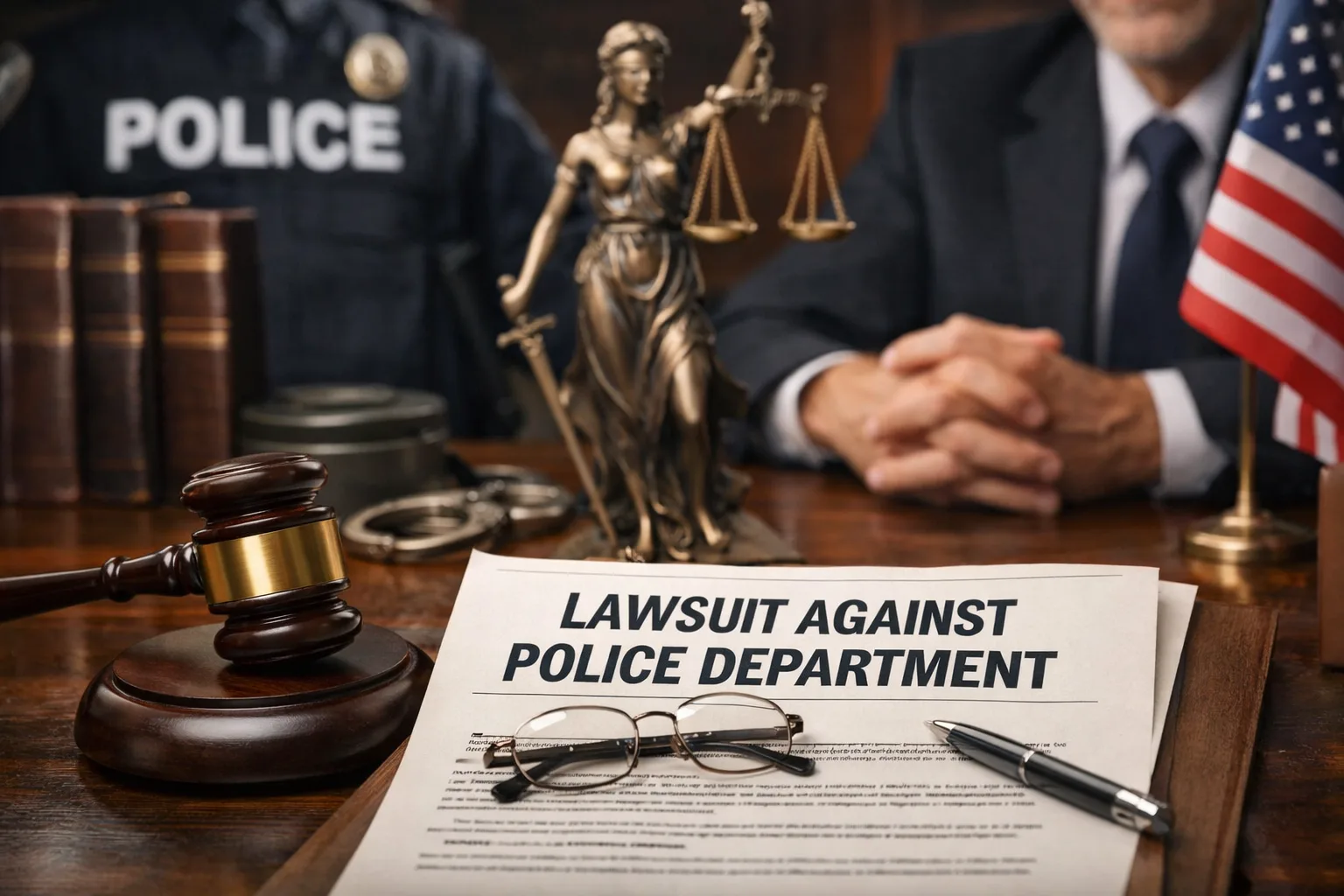
A moment of police misconduct can leave a person shaken, confused, and uncertain about what comes next. The power imbalance between an individual and a government agency feels overwhelming, especially when rights have been violated by those expected to protect them. In that moment, the search for an attorney to sue police department becomes more than a legal task. It becomes a path toward accountability and personal justice.
Legal action against a police department carries emotional weight and procedural complexity. Federal law, constitutional protections, and local policies intersect in ways that are not always obvious to someone outside the legal field. A qualified attorney does more than file paperwork. They reconstruct events, challenge authority, and navigate systems designed to defend institutional power.
Many people hesitate to take action, assuming that suing a police department is impossible or reserved for extreme cases. That assumption often prevents valid claims from ever being heard. Civil rights litigation exists precisely to address abuses of authority. When handled correctly, these cases can result in compensation, policy reform, and a clear message that misconduct has consequences.
Legal Grounds to Sue a Police Department in the United States
Civil Rights Violations Under Federal Law
The most common foundation for these cases lies in federal civil rights statutes, particularly Section 1983 of Title 42 of the United States Code. This law allows individuals to sue government officials, including police officers, for violating constitutional rights. It serves as a legal bridge between personal harm and federal accountability.
Claims often involve violations of the Fourth Amendment, such as unlawful searches, excessive force, or wrongful arrest. The Fourteenth Amendment also plays a role, especially in cases involving due process or equal protection violations. These constitutional protections are not abstract concepts. They are enforceable rights with real legal consequences when breached.
A skilled attorney to sue police department will analyze whether the officer acted under color of law and whether their conduct directly caused harm. This distinction is critical. It transforms a troubling encounter into a legally actionable claim.
Excessive Force and Use of Authority
Excessive force cases frequently arise when officers use more force than necessary under the circumstances. Courts evaluate these situations through an objective reasonableness standard. The question is not what the officer believed in hindsight, but whether their actions were justified at the moment based on available facts.
Situations involving tasers, firearms, or physical restraint often lead to litigation. Injuries, both physical and psychological, form part of the evidentiary foundation. Medical records, body camera footage, and witness testimony all contribute to the legal narrative.
Police departments may argue that force was justified due to perceived threats. An experienced attorney dissects those claims, examining inconsistencies and highlighting alternative actions that could have been taken. This process often reveals systemic issues within training or departmental policy.
False Arrest and Malicious Prosecution
False arrest occurs when a person is detained without probable cause. Malicious prosecution extends further, involving legal proceedings initiated without proper justification. Both claims can have lasting consequences, affecting employment, reputation, and mental health.
These cases require a careful examination of police reports, arrest records, and prosecutorial decisions. Discrepancies between evidence and official documentation often become central points of argument.
Attorneys in this field understand how to challenge narratives that appear legitimate on the surface. By uncovering gaps in reasoning or procedural errors, they build a case that reflects the true sequence of events.
How an Attorney Builds a Case Against a Police Department
Investigating the Incident Thoroughly
The foundation of any lawsuit begins with a detailed investigation. Attorneys gather evidence from multiple sources, including police reports, surveillance footage, dispatch records, and witness statements. Each piece contributes to a broader understanding of what occurred.
Timing plays a critical role. Evidence can disappear, memories fade, and official narratives solidify quickly. Early legal intervention preserves critical information and prevents key details from being lost.
Attorneys often work with investigators and forensic experts to reconstruct events. This process transforms fragmented accounts into a cohesive timeline that can withstand scrutiny in court.
Identifying Patterns and Departmental Liability
A single incident may reflect a broader pattern within a police department. Prior complaints, internal investigations, and disciplinary records can reveal systemic issues. This is where municipal liability becomes relevant.
To hold a department accountable, attorneys must demonstrate that the misconduct was not an isolated act but connected to policy, training, or supervision failures. This legal standard, established through precedent, raises the stakes significantly.
Patterns of behavior strengthen a case by showing that the department had knowledge of misconduct and failed to act. This shifts the focus from individual wrongdoing to institutional responsibility.
Filing the Lawsuit and Navigating Legal Procedures
Once evidence is assembled, the attorney drafts a complaint outlining the legal claims. This document sets the stage for the entire case. It defines the allegations, identifies defendants, and specifies the damages sought.
The litigation process involves motions, discovery, depositions, and potentially trial. Each phase requires strategic decisions and legal precision. Police departments often have experienced legal teams, making it essential for plaintiffs to have equally capable representation.
Deadlines and procedural rules vary by jurisdiction. Missing a filing deadline can end a case before it begins. Attorneys ensure compliance with these requirements, allowing the case to proceed without avoidable setbacks.
Choosing the Right Attorney to Sue Police Department
Experience in Civil Rights Litigation
Not all attorneys are equipped to handle cases against police departments. Civil rights litigation requires a deep understanding of constitutional law, federal statutes, and courtroom strategy. Experience in this niche often determines the outcome.
Attorneys with a track record in similar cases bring valuable insight into how courts interpret police conduct. They anticipate defenses, recognize patterns, and adapt strategies accordingly.
Past case results, while not guarantees, provide a glimpse into an attorney’s capability. Clients benefit from representation that combines legal knowledge with practical courtroom experience.
Resources and Legal Strategy
Cases against police departments can be resource intensive. Expert witnesses, forensic analysis, and extended litigation timelines require financial and logistical support. Attorneys must be prepared to invest in the case fully.
Strategic planning also plays a role. Decisions about settlement negotiations, trial readiness, and evidence presentation shape the trajectory of the case. A well-prepared attorney balances aggressive advocacy with calculated decision making.
Clients often underestimate the complexity of these cases. Strong legal representation ensures that every aspect is handled with precision and foresight.
Communication and Client Trust
Legal proceedings can feel isolating. Clear communication between attorney and client builds trust and reduces uncertainty. Clients need to understand the process, potential outcomes, and timeline.
Attorneys who prioritize transparency create a collaborative environment. This approach allows clients to remain informed and engaged throughout the case.
Trust extends beyond communication. It includes ethical conduct, realistic expectations, and a commitment to pursuing justice without unnecessary delay.
Costs and Compensation in Police Misconduct Cases
Contingency Fee Arrangements
Many attorneys handling police misconduct cases work on a contingency basis. This means clients do not pay upfront legal fees. Instead, the attorney receives a percentage of any settlement or court award.
This structure makes legal representation accessible to individuals who might otherwise be unable to afford it. It aligns the attorney’s interests with the client’s outcome, creating a shared incentive for success.
Fee percentages vary depending on the complexity of the case and the stage at which it resolves. Clear agreements at the outset prevent misunderstandings later.
Types of Damages You Can Recover
Compensation in these cases can include economic and non economic damages. Medical expenses, lost wages, and rehabilitation costs fall under economic damages. Pain, emotional distress, and reputational harm are considered non economic.
Punitive damages may also be awarded in cases involving egregious misconduct. These damages serve as a deterrent, signaling that certain actions carry severe consequences.
Calculating damages requires a detailed assessment of both immediate and long term impact. Attorneys often work with medical and financial experts to quantify losses accurately.
Practical Compensation Overview Table
| Type of Damage | Description | Example Scenario |
|---|---|---|
| Economic Damages | Financial losses tied to the incident | Hospital bills after excessive force |
| Non Economic Damages | Emotional and psychological impact | Trauma following wrongful arrest |
| Punitive Damages | Penalty against severe misconduct | Intentional abuse of authority |
| Legal Costs Recovery | Fees reimbursed if case is successful | Court orders department to pay attorney |
Challenges in Suing a Police Department
Qualified Immunity Defense
One of the most significant hurdles is qualified immunity. This legal doctrine protects government officials from liability unless they violated clearly established law. It creates a high threshold for plaintiffs.
Courts examine whether a reasonable officer would have known their actions were unlawful. This standard often leads to dismissal of cases that might otherwise appear valid.
Attorneys navigate this challenge by identifying precedents that closely match the facts of the case. Establishing a clear legal violation is essential to overcoming this defense.
Institutional Resistance and Legal Complexity
Police departments rarely concede liability easily. Legal teams work aggressively to defend officers and minimize exposure. This creates an adversarial environment that requires persistence and expertise.
Procedural complexity adds another layer of difficulty. Federal courts, local rules, and evidentiary standards all influence the case. Each step demands attention to detail and strategic thinking.
Clients often face emotional strain during this process. The legal system moves at a deliberate pace, requiring patience and resilience.
Public Perception and Case Pressure
High profile cases can attract media attention and public scrutiny. While visibility can bring awareness, it also introduces pressure on all parties involved.
Attorneys must manage both legal strategy and public narrative. Missteps in communication can affect the case and the client’s well being.
Balancing advocacy with discretion becomes a critical aspect of representation. This ensures that the focus remains on achieving justice rather than navigating external noise.
What to Do Immediately After Police Misconduct
Preserving Evidence and Documentation
The moments following an incident are crucial. Photographs, videos, and written accounts provide valuable evidence. Documenting injuries and collecting witness information strengthens the case.
Medical attention should be sought promptly. Medical records not only address health concerns but also serve as documentation of harm.
Preserving evidence requires intentional action. Even small details can become significant during litigation.
Filing Internal Complaints and Reports
Submitting a complaint to the police department creates an official record of the incident. While internal investigations may not always lead to accountability, they establish a timeline and demonstrate that the issue was raised.
Civilian review boards, where available, offer an additional avenue for oversight. These bodies provide independent evaluation of misconduct claims.
Attorneys often use these records as part of the broader case strategy. They reveal how the department responds to allegations and whether corrective measures were taken.
Consulting an Attorney Early
Early legal consultation allows for a thorough evaluation of the case. Attorneys can identify potential claims, advise on evidence preservation, and outline next steps.
Delays can weaken a case. Statutes of limitations impose strict deadlines for filing lawsuits. Missing these deadlines can eliminate the possibility of legal action.
Initial consultations often provide clarity during a confusing time. They transform uncertainty into a structured path forward.
FAQs
Can I sue a police department for emotional distress alone?
Emotional distress can form part of a claim, especially when tied to constitutional violations. Courts typically require evidence linking the distress to specific misconduct. Documentation from mental health professionals often strengthens this aspect of the case.
How long does a lawsuit against a police department take?
Timelines vary widely depending on complexity, court schedules, and whether the case settles or proceeds to trial. Some cases resolve within a year, while others extend over several years due to appeals and procedural delays.
Do I sue the officer or the department?
Both can be named as defendants. Officers may be sued individually for their actions, while departments can be held liable for policies or failures in supervision. The strategy depends on the facts of the case.
What if there is no video evidence?
Cases can still proceed without video. Witness testimony, medical records, and inconsistencies in official reports often provide sufficient evidence. Attorneys build cases using multiple sources to establish credibility.
Is it expensive to start a lawsuit?
Many civil rights attorneys work on contingency, reducing upfront costs. Additional expenses may arise during litigation, though these are often managed within the attorney client agreement.
Can undocumented individuals file a lawsuit against police misconduct?
Legal protections under the Constitution apply regardless of immigration status. Courts recognize that rights violations can occur irrespective of documentation, allowing individuals to pursue claims.
Closing Perspective
Holding a police department accountable requires determination, legal expertise, and a willingness to challenge authority within established systems. The process is demanding, yet it plays a vital role in maintaining the balance between public power and individual rights. A qualified attorney to sue police department transforms personal harm into a structured legal claim, grounded in evidence and constitutional law.
This area of law reflects more than individual disputes. It shapes how institutions respond to misconduct and how communities define justice. Each case contributes to a broader legal landscape where accountability is not optional but expected.