

TLDR
Burglary charges in the United States vary based on risk, intent, and circumstances. This article explains how first degree burglary differs from second degree burglary, how states classify them, penalties involved, and real world legal scenarios. After reading, you will know how prosecutors decide charges, how severity changes outcomes, and what factors increase or reduce criminal exposure.
Introduction
Burglary charges often sound similar, yet the legal consequences vary dramatically. Someone entering an occupied home at night faces a very different legal situation than a person entering an empty storage building during the day. Both fall under burglary laws, yet the degree of severity changes how courts treat the offense.
People often assume burglary only means stealing from a home. That assumption leads to confusion when someone faces charges even without theft. Burglary laws in the United States focus on unlawful entry with intent to commit a crime. That crime could involve theft, assault, or even property damage. The moment intent exists, prosecutors begin evaluating whether the case qualifies as first degree or second degree burglary.
The difference between these degrees affects sentencing, criminal records, plea negotiations, and long term consequences. Courts examine whether a structure was occupied, whether force was used, whether weapons were involved, and whether anyone was placed in danger. These elements determine how serious the charge becomes.
This article explains how first degree burglary and second degree burglary differ across the United States. It also explains why these distinctions matter, how prosecutors make decisions, and how real world cases illustrate the difference.
What Burglary Means Under US Criminal Law
Burglary laws developed long before modern criminal codes existed. Early legal systems treated unlawful entry into homes as especially dangerous. The law viewed homes as protected spaces where individuals expect safety. That principle still shapes modern burglary statutes.
In most states, burglary requires unlawful entry into a building, structure, or dwelling with intent to commit a crime. Theft is common, yet not required. Someone entering a home intending to commit assault may still face burglary charges.
This concept often surprises people. A person may enter through an unlocked door, take nothing, and still face burglary charges if intent existed. Courts look at behavior, circumstances, and evidence such as tools, planning, or statements.
Intent becomes the central factor. Prosecutors must show that the person planned to commit a crime at the time of entry. If someone enters lawfully and later commits a crime, burglary may not apply. Timing of intent matters in many cases.
The law also treats certain locations differently. Homes receive greater protection than commercial buildings. Occupied dwellings receive even more protection than empty structures. These distinctions create different degrees of burglary.
How First Degree Burglary Is Defined
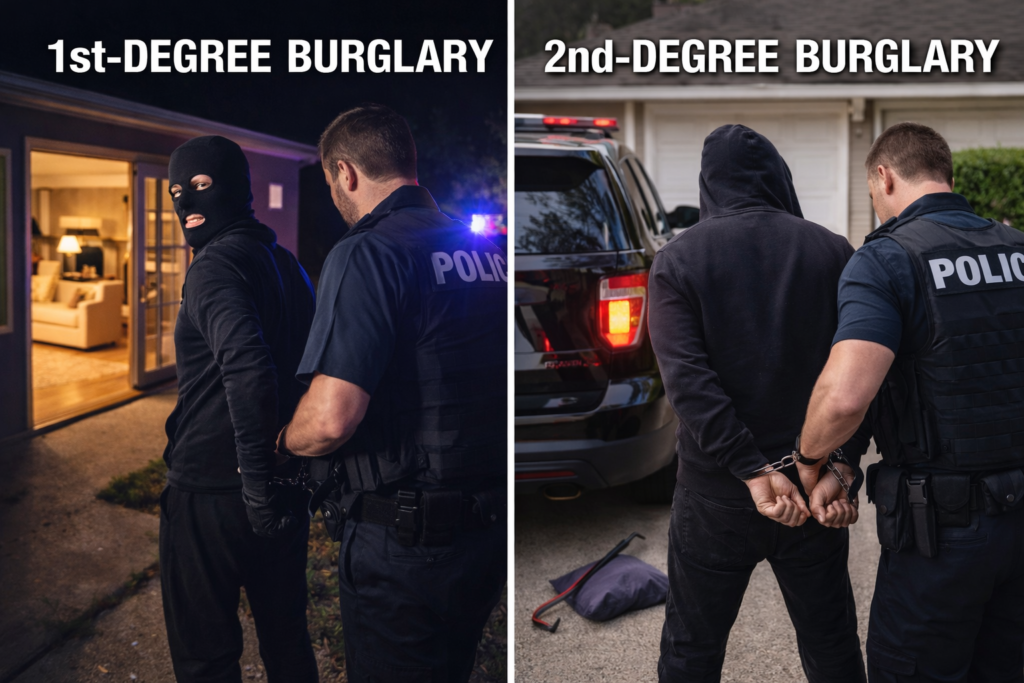
First degree burglary represents the most serious burglary classification in many states. Courts reserve this charge for situations involving heightened danger. The presence of people, use of weapons, or risk of violence often elevates the offense.
When Occupied Homes Increase Burglary Severity
Entering an occupied residence creates a strong risk of confrontation. Courts treat this scenario as dangerous because it can quickly escalate into violence. Even if no confrontation occurs, the law considers the risk itself enough to increase severity.
For example, entering a home while residents are sleeping often qualifies as first degree burglary. The law views nighttime entry into an occupied dwelling as especially threatening. This principle dates back centuries and still influences modern statutes.
Prosecutors focus on whether someone was present, not whether they interacted with the accused. A homeowner asleep upstairs still creates conditions for first degree burglary. The law prioritizes potential harm, not just actual harm.
Weapons and Threats That Elevate Charges
Possession of a weapon during unlawful entry often leads to first degree burglary. Courts consider weapons as increasing the likelihood of violence. Even if the weapon is never used, its presence can elevate the charge.
Some states include tools used as weapons. A crowbar or knife found during entry may support first degree burglary allegations. Prosecutors argue that carrying such items increases danger for occupants.
Threats also play a role. If someone enters unlawfully and threatens occupants, the offense typically becomes first degree burglary. Courts treat intimidation as a significant risk factor.
Nighttime Entry and Aggravated Circumstances
Many states treat nighttime burglary differently. Darkness increases unpredictability and fear. Courts historically considered nighttime entry more dangerous. Some states still classify nighttime residential burglary as first degree automatically.
Aggravating factors also influence charges. Breaking windows, forcing doors, or disabling alarms may strengthen first degree allegations. These actions suggest planning and increased risk.
Prosecutors evaluate all circumstances together. A combination of occupancy, weapons, and forced entry usually leads to first degree burglary charges.
How Second Degree Burglary Is Classified
Second degree burglary typically involves less dangerous circumstances. The offense still carries serious consequences, yet the risk level differs from first degree burglary.
Unoccupied Buildings and Non Residential Structures
Second degree burglary often involves commercial buildings, offices, warehouses, or storage units. These locations usually lack occupants, reducing the risk of confrontation.
Entering a closed retail store after hours often qualifies as second degree burglary. Even if property damage occurs, the absence of occupants lowers the severity. Courts focus on reduced potential for violence.
Empty homes also sometimes fall under second degree burglary. If no one is present, the risk decreases. States differ in how they classify this scenario, yet many treat it as second degree.
Daytime Entry Without Aggravating Factors
Daytime burglary often leads to second degree charges. Courts consider daytime entry less dangerous than nighttime intrusion. Visibility and reduced fear contribute to this classification.
For example, entering an unlocked office during business hours with intent to steal may qualify as second degree burglary. The absence of force or threat lowers severity.
Prosecutors analyze behavior carefully. Lack of weapons, threats, or confrontation often keeps the charge at second degree.
Property Crime Without Personal Risk
Second degree burglary often focuses on property rather than personal safety. The crime remains serious, yet the risk to individuals is lower.
Breaking into a storage facility, construction site, or empty commercial building typically fits this category. Courts treat these offenses as serious property crimes rather than violent threats.
Sentencing still includes potential jail time, probation, fines, and criminal records. Even second degree burglary carries long term consequences.
Key Legal Factors That Separate First and Second Degree Burglary
Courts evaluate several factors when determining burglary degrees. These factors vary slightly by state, yet core principles remain consistent across the United States.
Occupancy remains one of the strongest factors. Presence of people increases danger and elevates charges. Courts prioritize human safety above property protection.
Weapons also play a major role. Possession of firearms or other weapons suggests potential violence. Prosecutors use this factor to justify higher charges.
Time of entry affects classification. Nighttime intrusion often results in more serious charges. Courts recognize increased fear and unpredictability at night.
Use of force influences severity. Breaking doors or windows indicates aggressive entry. Courts view forced entry as increasing risk.
Intent also matters. Planned criminal activity suggests higher danger. Evidence of planning strengthens prosecution arguments.
These factors rarely exist alone. Prosecutors evaluate total circumstances when deciding charges.
How States Define Burglary Degrees Differently
Burglary laws vary across states. Some states use degree based systems. Others use classifications such as residential burglary, aggravated burglary, or burglary of a dwelling.
California treats first degree burglary as residential burglary involving inhabited dwellings. All other burglary types fall under second degree burglary.
New York defines first degree burglary as unlawful entry with aggravating factors such as weapons or injury. Second degree burglary involves entering dwellings without additional aggravation.
Florida uses similar classifications, yet includes additional elements such as assault during entry. Each state shapes burglary laws based on legislative priorities.
Despite variations, the central theme remains consistent. Greater risk to people leads to higher degree burglary charges.
Real World Examples of First Degree Burglary
Consider a scenario where someone enters a home at night while residents sleep. The individual carries a knife and attempts to steal valuables. Even without confrontation, this situation qualifies as first degree burglary in many states.
Another example involves forced entry into a home while occupants are present. Breaking a window and entering with intent to steal creates heightened risk. Courts treat this as first degree burglary.
A third example includes entering a home and threatening occupants. Even without theft, threats elevate the offense.
These examples illustrate how risk and intent shape charges.
Real World Examples of Second Degree Burglary
Breaking into an empty office after business hours often qualifies as second degree burglary. The absence of occupants reduces danger.
Entering a warehouse during daytime with intent to steal tools may also qualify. Courts consider reduced personal risk.
Another example involves entering an unlocked storage facility. Theft may occur, yet lack of violence lowers severity.
These cases demonstrate how second degree burglary focuses on property crimes rather than personal danger.
Penalties for First Degree Burglary
First degree burglary penalties are severe. Many states classify it as a felony with significant prison time. Sentences vary depending on jurisdiction, criminal history, and aggravating factors.
Some states impose mandatory minimum sentences. Judges may have limited discretion when aggravating factors exist. Repeat offenders often face longer sentences.
Fines, probation, and restitution may accompany imprisonment. Courts often require payment for damages or stolen property.
Felony convictions also create long term consequences. Employment, housing, and firearm rights may be affected. These consequences extend beyond prison time.
Penalties for Second Degree Burglary
Second degree burglary also qualifies as a felony in many states. Penalties may include jail time, probation, fines, and restitution.
Sentences are typically shorter than first degree burglary. Judges often consider criminal history and circumstances.
First time offenders may receive probation or reduced sentencing. Plea agreements sometimes reduce charges depending on evidence.
Even reduced sentences still create criminal records. Long term consequences remain significant.
How Prosecutors Decide Between Charges
Prosecutors review evidence, police reports, and witness statements. They examine risk factors and aggravating circumstances.
Intent becomes critical. Evidence such as tools, planning, or statements supports burglary charges. Lack of intent may reduce charges.
Prosecutors also consider public safety concerns. Cases involving occupied homes often receive higher priority.
Plea negotiations often occur. Charges may change based on evidence strength. Defense attorneys challenge intent and aggravating factors.
Long Term Consequences of Burglary Convictions
Burglary convictions affect employment opportunities. Background checks often reveal felony records. Employers may hesitate to hire individuals with burglary convictions.
Housing applications also become difficult. Landlords frequently conduct background checks. Criminal records may limit options.
Professional licensing may also be affected. Certain careers restrict individuals with felony convictions.
Immigration consequences may arise for non citizens. Burglary convictions sometimes affect visa status or residency.
These long term consequences highlight the seriousness of burglary charges.
FAQs
Is burglary the same as robbery?
Burglary involves unlawful entry with intent to commit a crime. Robbery involves taking property through force or intimidation. Robbery typically involves direct confrontation, while burglary may occur without interaction.
Can someone face burglary charges without stealing anything?
Yes. Intent to commit a crime is enough. Theft does not need to occur. Courts focus on intent at the time of entry.
Does entering through an unlocked door count as burglary?
Yes. Unlawful entry does not require forced entry. Entering without permission with criminal intent may qualify as burglary.
Are burglary laws the same in every state?
No. States define burglary differently. Some use degree classifications while others use separate categories such as residential burglary.
Can burglary charges be reduced?
Yes. Charges sometimes change during plea negotiations. Evidence, criminal history, and circumstances influence outcomes.
Is second degree burglary still a felony?
In many states, second degree burglary is still classified as a felony. Penalties vary depending on jurisdiction and case details.
Wrap Up
Burglary charges depend on risk, intent, and circumstances. First degree burglary typically involves occupied homes, weapons, or heightened danger. Second degree burglary often focuses on property crimes with reduced personal risk. These distinctions shape sentencing, criminal records, and long term consequences.
Courts prioritize safety and risk assessment. Prosecutors evaluate occupancy, time of entry, weapons, and intent. These factors determine how charges develop and how cases proceed.
Knowing these differences provides clarity for anyone researching burglary laws in the United States. The legal system treats burglary seriously, and the degree of the offense significantly influences outcomes. Understanding how these charges work helps readers grasp both legal risks and real world consequences.
