

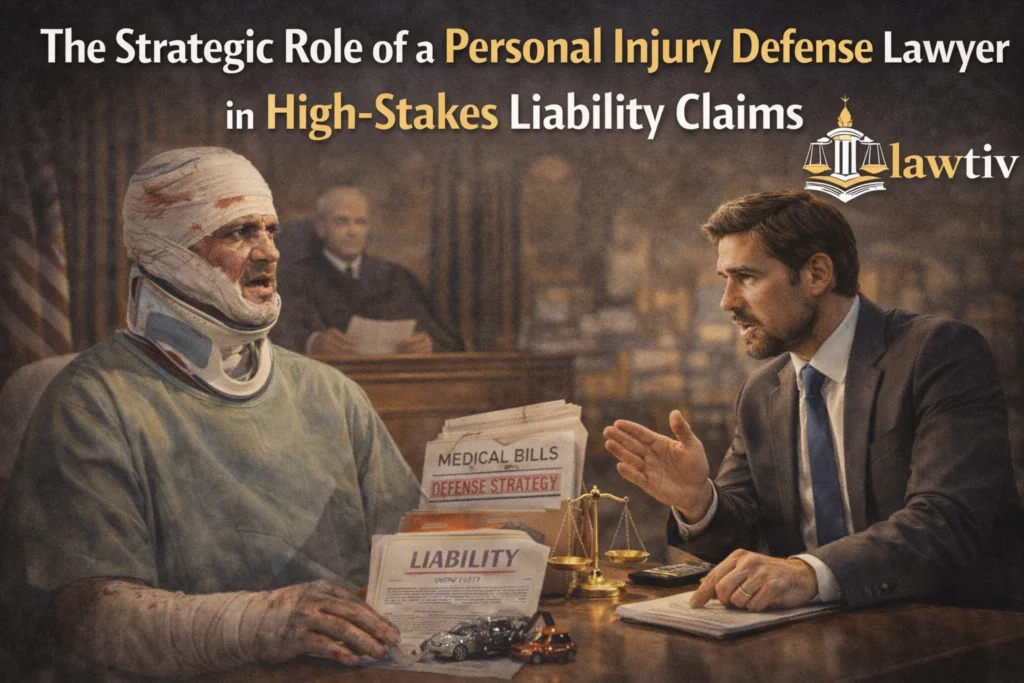
A serious accident can trigger legal consequences that extend far beyond the initial incident. When an injury claim is filed, the focus often shifts toward compensation for the injured party. At the same time, individuals, businesses, and insurance companies face the challenge of defending themselves against allegations of negligence or liability.
Civil litigation tied to injury claims can involve complex legal arguments, medical documentation, accident reconstruction, insurance policy interpretation, and negotiations with opposing counsel. A personal injury defense lawyer becomes the central figure responsible for protecting the legal and financial interests of the defendant while ensuring that liability is evaluated through evidence rather than assumptions.
Legal defense in these cases requires far more than courtroom advocacy. The process begins long before trial, often through investigations, early settlement discussions, and strategic case evaluation. Skilled defense attorneys examine every element of the claim, from accident reports and witness testimony to medical treatment timelines and expert analysis. This level of scrutiny helps determine whether the claim is valid, exaggerated, or unsupported.
Across the United States, personal injury defense attorneys represent a wide range of clients. Defendants can include private individuals, corporations, construction companies, property owners, hospitals, manufacturers, trucking companies, and insurance carriers. Each case carries its own legal dynamics, and the defense strategy must adapt to the facts and jurisdiction involved.
A single claim can expose a defendant to large financial damages, reputational damage, and prolonged litigation. Legal representation with deep experience in injury defense plays a decisive role in controlling risk, managing negotiations, and building a case capable of standing up in court.
Legal Foundations Behind Personal Injury Defense Representation
Civil injury lawsuits are rooted in tort law, a legal framework that determines when one party may be held responsible for harm caused to another. Defense lawyers analyze how negligence, liability standards, and comparative fault rules apply to each claim.
In the United States, personal injury litigation revolves around four legal elements. The plaintiff must establish duty of care, breach of duty, causation, and damages. If even one of these components cannot be proven, the claim weakens significantly. Defense attorneys focus heavily on challenging these elements.
Many injury cases revolve around disputed facts. An accident victim may claim that a property owner failed to maintain safe conditions, while the property owner may argue that the hazard was obvious or that the injured party ignored warnings. Defense counsel builds arguments supported by evidence, expert opinions, and legal precedent.
Insurance companies frequently appoint defense attorneys to represent policyholders when claims arise. These lawyers serve as the legal shield that protects the insured party while working within the framework of insurance coverage and liability limits.
State laws play a crucial role in shaping defense strategy. Comparative negligence rules, damage caps, statute of limitations deadlines, and evidentiary standards vary across jurisdictions. A defense attorney familiar with state-specific legal landscapes can identify strategic advantages early in the litigation process.
Types of Claims Handled by Personal Injury Defense Lawyers
Personal injury defense practice covers a wide spectrum of liability claims. Each category requires specialized knowledge of industry regulations, accident analysis, and medical evidence.
Motor vehicle accidents remain one of the most common sources of litigation. Defense attorneys may represent drivers, trucking companies, or commercial transportation providers accused of causing injuries in collisions.
Premises liability cases arise when someone claims injury due to unsafe property conditions. Slip and fall incidents in retail stores, apartment complexes, hotels, or office buildings frequently lead to lawsuits involving property owners and management companies.
Product liability claims target manufacturers or distributors when defective products allegedly cause injury. Defense attorneys work closely with engineers, product safety experts, and regulatory specialists in these cases.
Workplace injury lawsuits sometimes move beyond workers compensation systems when third-party liability is involved. Contractors, equipment manufacturers, and property owners may become defendants in these claims.
Medical malpractice defense forms another branch of personal injury defense practice. Hospitals, physicians, and healthcare institutions often require specialized legal teams capable of analyzing complex medical evidence.
The Financial Stakes of Liability Litigation
Personal injury claims can involve substantial monetary damages. Compensation demands often include medical expenses, lost income, rehabilitation costs, pain and suffering, and long-term disability impacts.
High-value cases may involve catastrophic injuries such as spinal cord trauma, brain injuries, severe burns, or permanent disability. These claims often involve life care planning experts who calculate future medical costs over decades.
Defense attorneys must evaluate the economic exposure associated with a claim while determining the strength of the plaintiff’s arguments. This evaluation shapes decisions regarding settlement negotiations, mediation strategies, or trial preparation.
Insurance policy limits also influence litigation strategy. If potential damages exceed coverage limits, defendants may face personal financial exposure. Legal counsel must carefully navigate settlement discussions to reduce risk while protecting the client’s interests.
How Personal Injury Defense Lawyers Build a Case Strategy
The development of a strong defense strategy begins with detailed investigation. Attorneys gather documentation, review accident reports, interview witnesses, and examine medical records.
Evidence forms the backbone of any defense. Surveillance footage, vehicle data recorders, maintenance logs, safety inspection reports, and digital communications often play crucial roles in reconstructing events.
Expert witnesses frequently assist defense teams. Accident reconstruction specialists analyze vehicle speeds and impact angles. Medical experts evaluate injury severity and treatment necessity. Economic experts review damage calculations presented by the plaintiff.
Legal strategy often focuses on identifying inconsistencies in the plaintiff’s narrative. Medical histories may reveal prior injuries. Social media activity sometimes contradicts claims of physical limitations. Time gaps in medical treatment can raise questions about injury severity.
Defense attorneys also examine procedural issues. Missed filing deadlines, jurisdictional problems, or incomplete documentation can weaken a claim significantly.
Negotiation and Settlement Dynamics
Many personal injury claims resolve through negotiated settlements rather than jury trials. Defense lawyers often engage in settlement discussions with opposing counsel, insurance representatives, and mediators.
Settlement negotiations require careful analysis of legal risk. Attorneys evaluate the likelihood of liability findings, jury behavior patterns in local courts, and potential damage awards.
Mediation sessions sometimes occur before trial. Neutral mediators help both sides explore potential resolutions while avoiding the cost and uncertainty of courtroom litigation.
Defense counsel must balance financial exposure with legal principle. In some cases, defendants choose settlement to avoid prolonged litigation. In others, attorneys recommend trial when evidence strongly favors the defense.
Courtroom Advocacy and Litigation Tactics
When settlement discussions fail, cases proceed toward trial. Courtroom litigation requires mastery of procedural rules, evidentiary standards, and persuasive argumentation.
Defense lawyers challenge the plaintiff’s evidence through cross examination, expert testimony rebuttal, and legal motions. Judges may dismiss certain claims before trial if legal standards are not met.
Jury selection plays a significant role in trial outcomes. Attorneys carefully evaluate potential jurors to identify individuals who may view liability or compensation claims through particular perspectives.
Trial presentation involves a combination of factual evidence, visual demonstrations, expert testimony, and narrative framing. Defense counsel aims to show that the plaintiff has not met the burden of proof required under civil law.
Industries That Frequently Require Personal Injury Defense Lawyers
Liability exposure exists across many sectors of the American economy. Certain industries face higher litigation risks due to the nature of their operations.
Construction companies encounter injury claims involving workplace accidents, equipment failures, or safety violations. Defense attorneys examine compliance with Occupational Safety and Health Administration standards and contractual responsibilities between contractors.
Retail businesses face premises liability lawsuits tied to slips, falls, or falling merchandise. Defense teams often analyze maintenance records, surveillance footage, and store safety policies.
Transportation companies face accident claims involving commercial trucks, delivery vehicles, or rideshare drivers. These cases often require analysis of federal transportation regulations and driver logbooks.
Healthcare institutions confront malpractice allegations involving diagnosis errors, surgical complications, or treatment decisions. Medical experts become central figures in these defense cases.
Manufacturers encounter product liability litigation involving design defects, manufacturing errors, or inadequate warning labels. Engineers and product safety experts often assist legal teams during trial preparation.
Insurance Defense and Corporate Legal Teams
Many personal injury defense lawyers operate within insurance defense practices. Insurance carriers retain law firms to defend policyholders when claims arise.
Corporate legal departments also work closely with defense attorneys. Large companies often maintain internal risk management teams that coordinate with outside counsel during litigation.
Insurance defense attorneys must understand both legal liability and insurance contract interpretation. Coverage disputes sometimes arise when insurers question whether a policy applies to a specific claim.
Cooperation between defense counsel, claims adjusters, and corporate risk managers often determines how efficiently a case progresses through litigation.
Evidence and Investigation in Injury Defense Cases
Strong evidence frequently determines the direction of a personal injury lawsuit. Defense attorneys rely on systematic investigation to challenge liability claims and evaluate damages.
Accident scene documentation becomes critical in early case stages. Photographs, police reports, emergency response records, and witness statements create a factual foundation.
Medical records require close examination. Defense lawyers review diagnostic imaging, treatment notes, physician reports, and billing documentation to determine whether the injuries align with the alleged accident.
Digital evidence increasingly appears in litigation. Smartphone data, fitness trackers, GPS logs, and surveillance systems can reveal details about movement, timing, and physical activity.
Independent medical examinations sometimes occur when the defense questions the extent of injuries. Neutral physicians evaluate the claimant’s condition and provide professional opinions for the court.
Comparative Negligence and Liability Allocation
Many U.S. states apply comparative negligence rules. These laws allow courts to assign percentages of fault to multiple parties involved in an accident.
A plaintiff may still recover damages even if partially responsible for the incident. The compensation amount is typically reduced according to the plaintiff’s share of fault.
Defense attorneys work to demonstrate that the injured party contributed to the accident. Evidence such as unsafe behavior, failure to follow safety instructions, or violation of traffic laws may influence liability allocation.
Liability disputes often involve multiple defendants. Construction accidents, vehicle collisions, and product liability cases frequently include several parties with varying degrees of responsibility.
Damages Evaluation and Economic Analysis
Accurately assessing damages plays a central role in personal injury defense. Plaintiffs may seek compensation for both economic and non economic losses.
Economic damages include medical expenses, rehabilitation costs, lost wages, and future treatment needs. Defense attorneys analyze these claims carefully, often consulting financial experts and life care planners.
Non economic damages involve pain, suffering, emotional distress, and loss of enjoyment of life. These damages rely heavily on subjective interpretation, making them frequent targets for legal challenge.
Defense counsel may question inflated medical bills, unnecessary treatments, or speculative future expenses. Careful evaluation of damages can significantly influence settlement negotiations.
| Case Element | Defense Investigation Focus | Legal Impact |
|---|---|---|
| Accident Evidence | Scene analysis, witness accounts | Establishes factual timeline |
| Medical Records | Injury causation, treatment necessity | Challenges damages claims |
| Expert Testimony | Technical and medical interpretation | Influences jury perception |
| Liability Allocation | Comparative negligence analysis | Reduces financial exposure |
| Economic Damages | Cost verification and projections | Limits settlement value |
Choosing a Personal Injury Defense Lawyer in the United States
Selecting legal representation for injury defense requires careful evaluation of professional experience, litigation history, and industry familiarity.
A lawyer with extensive courtroom experience often provides stronger trial readiness. Insurance companies and corporate clients frequently review verdict records and case outcomes before selecting defense counsel.
Legal specialization also matters. Some attorneys focus heavily on trucking accidents, while others concentrate on medical malpractice or product liability litigation.
Professional credentials may reveal a lawyer’s reputation within the legal community. Board certifications, trial advocacy awards, and leadership roles in defense organizations often reflect advanced expertise.
Communication style also plays a practical role. Clients benefit from attorneys who explain legal developments clearly while maintaining realistic expectations about case outcomes.
An example of a U.S. law firm offering injury defense representation is Goldberg Segalla LLP, a national civil litigation firm that handles complex liability defense cases. For inquiries, one of their offices can be reached at +1 716-566-5400.
Frequently Asked Questions About Personal Injury Defense Lawyers
What does a personal injury defense lawyer do?
A personal injury defense lawyer represents individuals, businesses, or insurance companies accused of causing injuries through negligence. Their role involves investigating claims, challenging liability allegations, negotiating settlements, and defending clients during civil trials. These attorneys analyze evidence, question medical claims, and work to reduce or eliminate financial exposure tied to lawsuits.
Who hires personal injury defense attorneys in the United States?
Defense lawyers often represent insurance companies, corporate defendants, property owners, healthcare institutions, and private individuals. When an insurance policy covers a claim, the insurer typically appoints legal counsel to defend the insured party. Businesses facing injury lawsuits may also retain private defense attorneys.
Can a personal injury defense lawyer prevent a case from going to trial?
Many injury claims resolve before reaching a courtroom. Defense attorneys frequently negotiate settlements or participate in mediation sessions that allow both sides to reach a financial agreement. If the evidence strongly favors the defense, attorneys may pursue dismissal motions that end litigation early.
What happens if a defendant loses a personal injury case?
When a court determines that a defendant is legally responsible for injuries, the defendant may be ordered to pay financial damages. These damages can include medical costs, lost income, and compensation for pain and suffering. Insurance coverage often pays a large portion of the award when policies apply.
How long do personal injury defense cases last?
Case timelines vary widely depending on complexity, court schedules, and negotiation progress. Some claims resolve within several months through settlement discussions. Others continue for years when disputes over liability or damages require extensive litigation and trial preparation.
Do personal injury defense lawyers handle appeals?
Defense attorneys may continue representing clients during appellate proceedings if a trial verdict raises legal questions. Appeals focus on procedural issues, judicial decisions, or interpretation of law rather than reexamining factual evidence. Appellate litigation requires advanced legal analysis and written argumentation.
The Strategic Importance of Experienced Personal Injury Defense Representation
Civil injury litigation carries substantial financial and reputational risks for defendants across the United States. A single lawsuit can evolve into a multi-year legal battle involving expert witnesses, complex evidence, and significant compensation demands.
Personal injury defense lawyers operate at the intersection of law, investigation, and negotiation. Their work involves dissecting accident claims, challenging unsupported allegations, and presenting evidence that clarifies how an incident actually occurred.
Strong legal defense shapes outcomes long before a jury ever hears a case. Careful evidence review, strategic negotiation, and trial readiness create leverage that influences settlement discussions and courtroom proceedings alike.
Defendants facing injury claims benefit from legal counsel capable of navigating liability law, insurance frameworks, and courtroom advocacy. In high-stakes litigation, the experience and strategy of a personal injury defense lawyer often determine whether a case ends in financial loss or a successful defense verdict.
